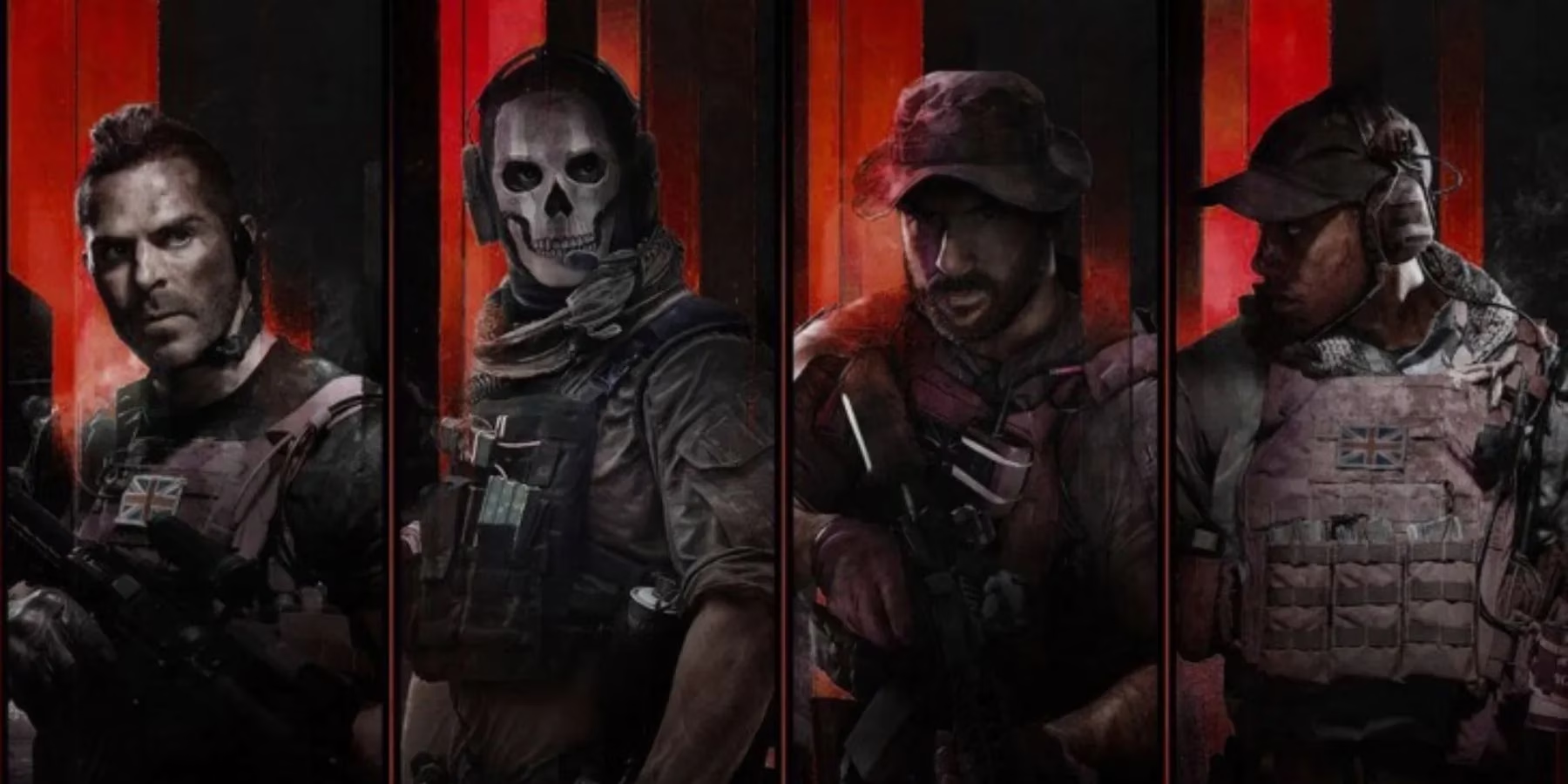
The London Underground lay shrouded in suppressed tension. Captain Price and his task force had just uncovered Makarov’s final, cruel design: a hostage crisis fused with a demolition plot that would turn the tunnels into a tomb. The clock was their enemy, and every second that bled away felt heavier than the last. Racing against the inevitable, the team scattered to disarm multiple explosive devices. For a fleeting instant, hope flickered. Then, in the dank half-light of the tunnel, the hunter became the hunted.
Price and Soap were crouched beside a bomb, wires and desperation tangling in their fingers, when footsteps echoed behind them. Before either could react, Makarov emerged from the shadows like a specter. A single shot rang out—cold, clinical, and deliberate. Soap crumpled to the ground, blood blossoming across his chest. Price, thrown aside by the force of a shove, could only watch in horror as the villain stood over his friend. But then, against all logic, Soap stirred. He rose like a wounded animal making a final stand, grappling for Makarov’s weapon. It was a moment of primal defiance, a last gasp of willpower. Yet it ended as abruptly as it began: a second shot, this one to the head, silenced him forever. Makarov fled into the darkness, leaving Price to defuse the bomb while the rest of the team arrived to find only Soap’s lifeless body.
This scene, the climactic sacrifice of John “Soap” MacTavish, was meant to be the emotional core of Call of Duty: Modern Warfare 3’s campaign. But did it truly resonate? For many players, the answer was a hollow no. The death felt less like a tragic culmination and more like a narrative afterthought, a hurried beat that sacrificed depth for shock value. Why did such a pivotal moment fall so flat?
To understand the disappointment, one must revisit the original 2011 Modern Warfare 3. There, Soap’s death was a slow, agonizing knife-twist. Players had spent three full games in his boots and at his side, from his baptism by fire as a fresh SAS recruit to his hardened leadership in Task Force 141. When he finally succumbed to wounds and blood loss in a dusty safehouse, Price’s anguished cry—“Soap! No, no, no!”—echoed through the speakers and straight into the hearts of fans. That death was earned over years of shared battles and quiet camaraderie. It was a narrative debt that the original trilogy paid in full, and the emotional payoff was devastating.
Now, contrast that with the 2023 reboot. This new iteration of Soap was only introduced in last year’s Modern Warfare 2. He had a few standout moments—raiding a cartel compound, cracking wise with Ghost—but the reboot series never gave him the same breathing room. His screen time was limited, his inner life barely explored. What did players truly know about this Soap? He was brave, certainly. Loyal. But the connection remained surface-level, built more on borrowed nostalgia for the name than on the character standing before them. Could anyone honestly say they felt the same bond after a single game? The question answers itself.
This lack of attachment turned Soap’s final moments into an awkward spectacle rather than a gut-wrenching farewell. The choreography itself felt strangely stilted. After being shot once, Soap mysteriously stands up, almost as if the writers couldn’t decide whether to give him a heroic struggle or a swift end. The resulting tussle for Makarov’s gun lacks any real weight; it’s too sudden, too disjointed. One moment he’s down, the next he’s up, and then he’s gone. The sequence plays out with a mechanical abruptness that leaves little room for emotion to settle. Instead of heartbreak, the prevailing reaction was confusion—or worse, indifference.
The reboot’s handling of Soap’s death also highlights a broader storytelling pitfall within the franchise. When a game relies on the legacy of a beloved character but fails to build its own foundation, the result is a hollow echo. Fans mourned the idea of Soap, not the man they had come to know in Modern Warfare 2 (2022). The narrative asked for a sorrow it hadn’t earned, and in doing so, it squandered one of the series’ most iconic moments.
Perhaps the most telling indictment comes in the immediate aftermath. After Soap falls, the mission hurtles forward without pause. Price defuses the bomb, the team regroups, and the story practically shoves the player toward the next objective. There is no quiet moment of reflection, no space to grieve. Only later, in a closing cutscene, do Ghost, Price, and Gaz gather to scatter Soap’s ashes along a windswept cliff. It’s a beautifully rendered scene—the low sun painting the water gold, the somber faces of men who have lost a brother. For some, this epilogue stitches the wound shut. It’s a gesture of respect that almost salvages the earlier mishandling. But can a single quiet scene undo the damage of a rushed, unearned death? For many, the answer is a reluctant no.
In the end, Soap MacTavish’s death in Call of Duty: Modern Warfare 3 becomes a cautionary tale. It reminds us that emotional impact is not simply a matter of placing a beloved character in the crosshairs. It requires time, care, and genuine storytelling investment. The reboot series still has time to learn from this misstep, to craft moments that resonate on their own terms rather than leaning on the crutch of past glory. Until then, the ghost of Soap MacTavish will linger not as a tragic hero, but as a symbol of what could have been—a life cut short, and a death that deserved more.