In the grand, chaotic theater of Call of Duty: Warzone, cheaters have long been the mosquitos at the barbecue—annoying, persistent, and seemingly immune to ordinary swatting. Activision, however, decided that if cheaters want to fly, they can fly straight into the ground. Enter Splat, the anti-cheat feature that does not just ban rule-breakers; it gives them a one-way ticket to the concrete. First detailed in late 2023 as Ricochet prepared for Call of Duty: Modern Warfare 3, Splat remains one of the most delightfully petty punishments in online gaming. By 2026, the war on cheaters has only gotten more sophisticated, but Splat is still the stuff of legend: a digital bouncer who does not escort trouble-makers out the door—they cut the cord mid-air and let gravity do the paperwork. 😈
The Splat Heard Around the Warzone
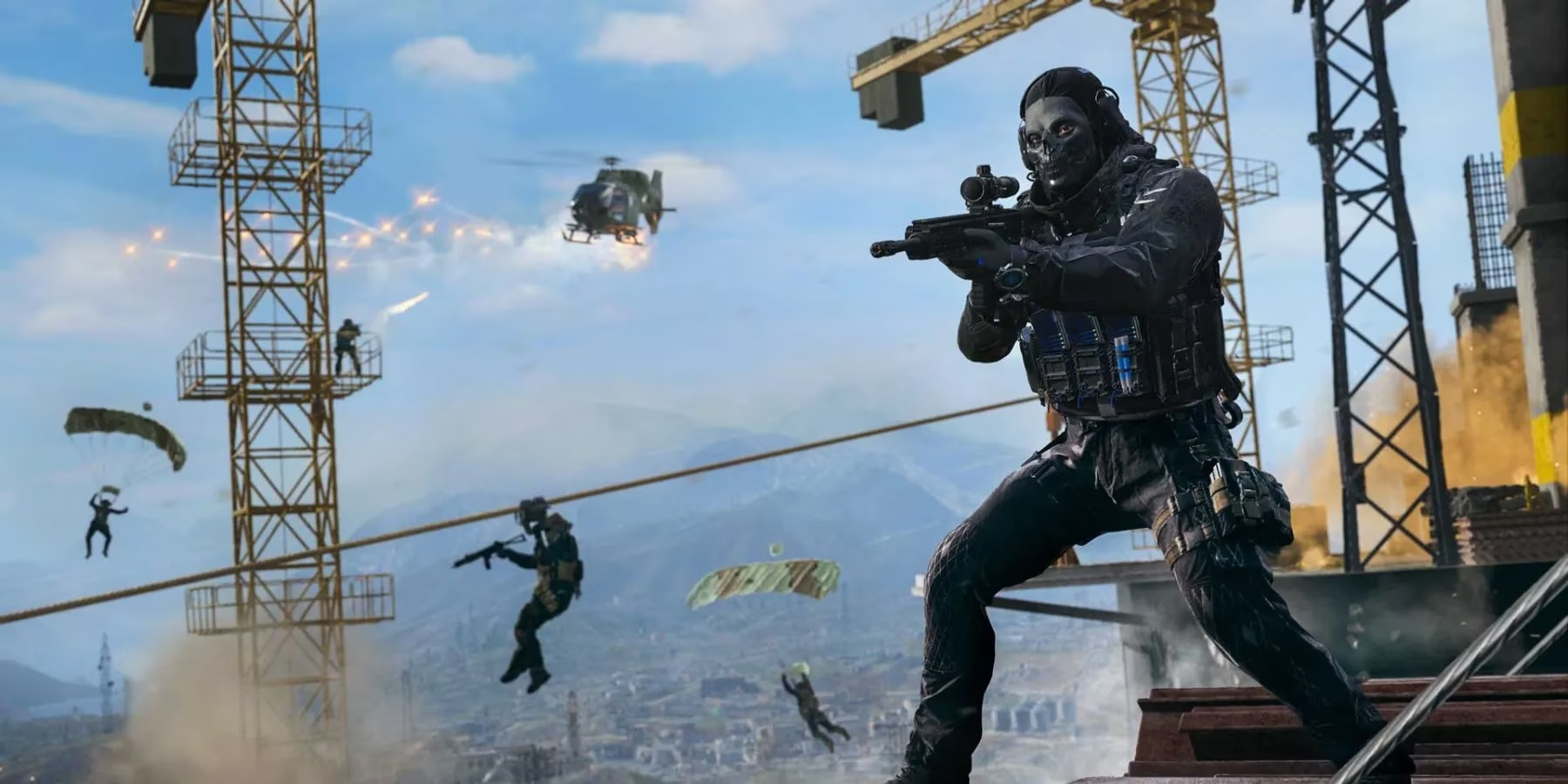
Splat works like this: Ricochet detects a cheater during deployment, then cuts their parachute. No trial, no appeal, no gentle descent. The cheater plummets to the map and becomes a human pancake. If the cheater is detected after deployment, Splat gets even cheekier. It adjusts player velocity, turning a bunny hop into a 10,000-foot drop. One second they are hopping like a caffeinated rabbit; the next, they are a crater. Activision made it clear that Splat is not triggered by player reports. That means the system relies on Ricochet's own detection, which is both impressive and a little terrifying. After all, nobody wants a false positive to turn a casual parachute landing into an unscheduled geology lesson.
The feature was announced in an official blog post alongside major Ricochet upgrades. Activision's ultimate goal was not merely to torment cheaters occasionally, but to prevent them from entering matches altogether. Splat was the flashy headline, but the real work happened in the shadows: machine learning models and a Replay Investigation Tool that help detect hackers efficiently. Think of it as a surveillance state for the lobby, minus the tinfoil hats. The system watches, learns, and then decides whether a player deserves a fair fight or a sudden appointment with the ground.
Ricochet: The Cat, the Mouse, and the Endless Chase
Hackers have been a common problem in Warzone 1 and Warzone 2. Activision only started using its dedicated Ricochet Anti-Cheat when Call of Duty: Vanguard launched in 2021. Since then, Ricochet has managed to keep cheating somewhat under control, but hackers find workarounds from time to time. It is a classic cat-and-mouse game, except the mouse has aimbot and the cat has a machine-learning PhD. Activision has also banned thousands of players in ban waves, but the problem persists. Splat was a way to add insult to injury—a punishment that is as hilarious as it is effective.
By 2026, the anti-cheat arms race has evolved. Server-side detection, AI-driven behavior analysis, and shadow bans have become standard tools. Yet Splat remains a fan-favorite because it turns a technical failure into slapstick comedy. Cheaters gonna cheat, but they are also gonna splat. No cap.
Urzikstan: Smaller Map, Bigger Chaos
While Ricochet was busy playing executioner, Warzone also got a brand-new map called Urzikstan. Compared to Al Mazrah, Urzikstan is smaller, but its environment is denser, making combat more intense. There are around 11 major POIs, which means players cannot walk ten feet without stumbling into a firefight. It is like someone took a battle royale map and compressed it with a trash compactor, then sprinkled in slide-canceling from Modern Warfare 3. Movement mechanics from MW3 gave players more ways to zip around, which made the map feel faster and more brutal.
Modern Warfare 3's Rocky Launch
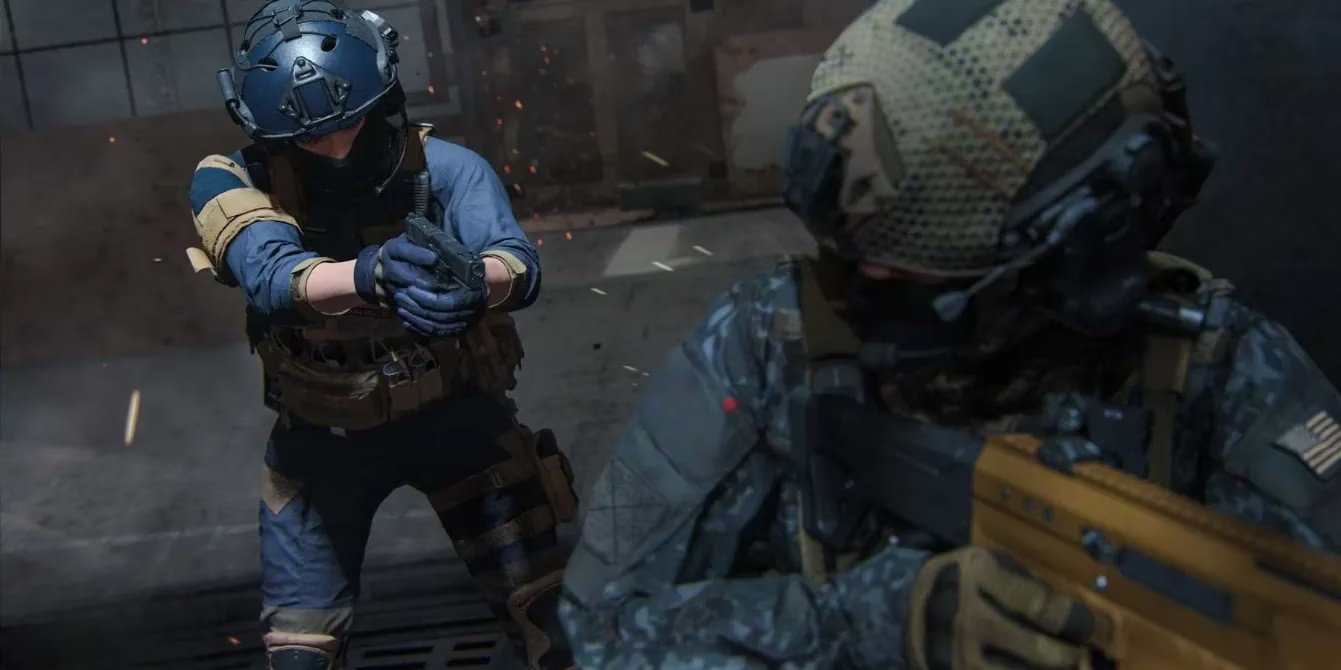
Despite the promising changes, Modern Warfare 3 had a strenuous launch. Reports suggested the game had a rushed development. However, Sledgehammer Games' studio head denied these claims and assured fans that the game was planned well in advance. Whether that assurance aged like fine wine or milk left in the sun is a debate for another day. What matters is that Warzone kept evolving, and Ricochet kept swinging its digital flyswatter.
| Feature | What It Does | Cheater's Reaction |
|---|---|---|
| Splat | Cuts parachute during deployment or adjusts velocity after deployment | Instant gravity-based regret |
| Machine Learning | Learns from gameplay data to detect suspicious behavior | Confusion, then ban |
| Replay Investigation Tool | Helps devs review suspicious matches | 'It was not me' |
| Ban Waves | Mass bans thousands of accounts | Tears in the Discord |
The Bottom Line
Activision's Splat feature is a masterclass in trolling cheaters. It does not just remove them from the match; it makes them a cautionary tale. In a world where online gaming cheaters often feel untouchable, there is something poetic about a system that literally drops them from the sky. As 2026 rolls on, the battle between Ricochet and hackers continues, but one thing is certain: if a cheater hears a sudden rip-cord snap, they had better start writing their will. Warzone may be a game of survival, but for hackers, it is now a game of sudden, spectacular splat. 🪂💥