In the year 2026, the Call of Duty Zombies community stands as a magnificent, chaotic tapestry woven from threads of nostalgia, innovation, and irreconcilable desire. For many, the undead-slaying mode is not merely a game but a digital hearth, a repository of memories as vivid as a childhood home. Veterans fondly recall the hypnotic, rhythmic dance of training on the Kino Der Toten stage or the tense, claustrophobic solidarity of camping the Der Riese catwalk, their controllers practically vibrating with the ghosts of past strategies. Newer acolytes dream in the kaleidoscopic colors of elemental bows and the thunderous wingbeats of rideable dragons. Story theorists can weave intricate tapestries of alternate timelines and the machinations of characters like Edward Richtofen for hours, while gameplay purists could spend a full calendar day passionately debating tier lists for maps and Wonder Weapons. Yet, this immense reservoir of goodwill is the very source of Treyarch's conundrum; pleasing this hydra-headed beast of a fanbase is a task as futile as trying to herd cats during a thunderstorm.
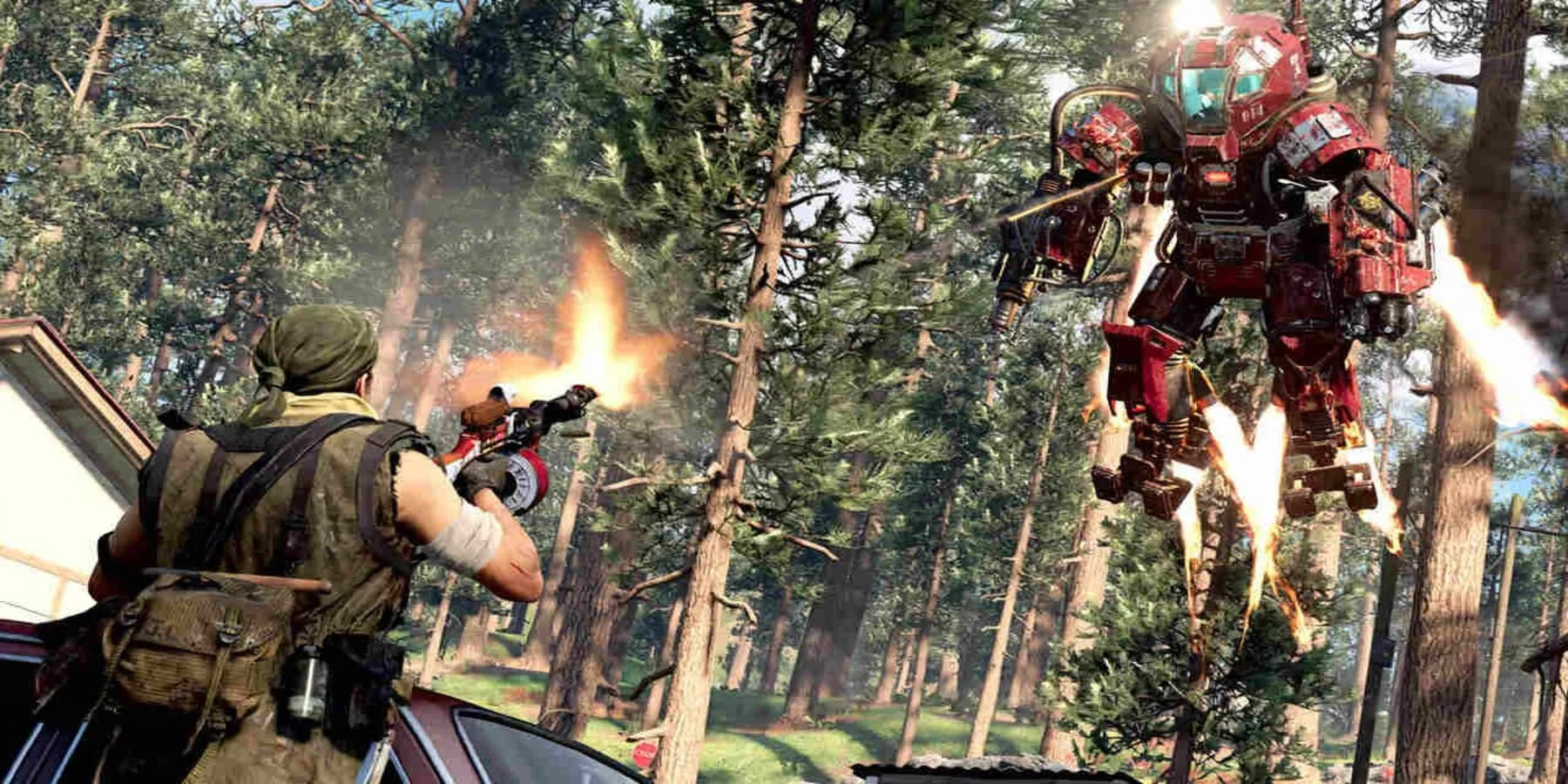
The current state of Call of Duty Zombies discourse is a spectacle to behold, a grand, gladiatorial arena of conflicting ideologies. One need only glance at the polarized reception to the open-world Zombies mode in Call of Duty: Modern Warfare 3 to witness the civil war in action. The community is fractured clean down the middle. On one side, pioneers cheer at the prospect of another Outbreak-like expanse, reveling in the freedom to leap from skyscrapers with the triumphant return of PhD Flopper, their joy as boundless as a child in a candy store. On the opposing flank, traditionalists mourn the perceived abandonment of the sacred, round-based survival formula, their disappointment as palpable as a deflated birthday balloon. For every player thrilled by the new frontier, another fumes over the absence of a dense, puzzle-box main quest. This fundamental schism is the mode's original sin; Call of Duty Zombies has evolved to mean something profoundly different to each subset of its players, dooming it to a perpetual state of divided affection.
The Marvel-ous Parallel: A Universe Too Vast
This predicament mirrors, with uncanny precision, the saga of the present-day Marvel Cinematic Universe. Like the MCU in its infancy, Call of Duty Zombies was once a shining beacon of unanimous acclaim, a mode that could seemingly do no wrong. Even missteps like the divisive TranZit were endured with a kind of affectionate grumbling, not outright rejection. Every map pack release was a communal holiday, a chance to collectively unravel new narrative threads and master fresh gameplay loops. But time, ambition, and expansion have taken their toll. Today, both entities host fanbases splintered on virtually every creative decision. Just as every new MCU project now arrives with its own dedicated battalion of detractors, so too does each new Treyarch Zombies offering.
The parallels are striking:
| Call of Duty Zombies Factions | Marvel Cinematic Universe Factions | Core Desire |
|---|---|---|
| Round-Based Purists | Fans of the Infinity Saga Formula | A return to focused, contained storytelling and gameplay. |
| Open-World Explorers | Supporters of Disney+ Series Expansion | More content, world-building, and character depth. |
| Easter Egg Hunters | Lore Theorists & Deep-Divers | Complex, obscure puzzles that reward dedication. |
| Storyline Scholars | Cinematic Continuity Fans | A clear, coherent, and advancing narrative. |
| Casual Survivalists | Popcorn-Movie Enjoyers | Straightforward, high-action fun without homework. |
Some players crave solitary, character-driven stories, while others demand big, universe-altering events. Some decry experimental additions as blasphemy, while others champion them as necessary evolution. The mode, like the cinematic universe, has expanded in too many directions at once, making universal satisfaction a mathematical impossibility.
The Double-Edged Sword of Innovation
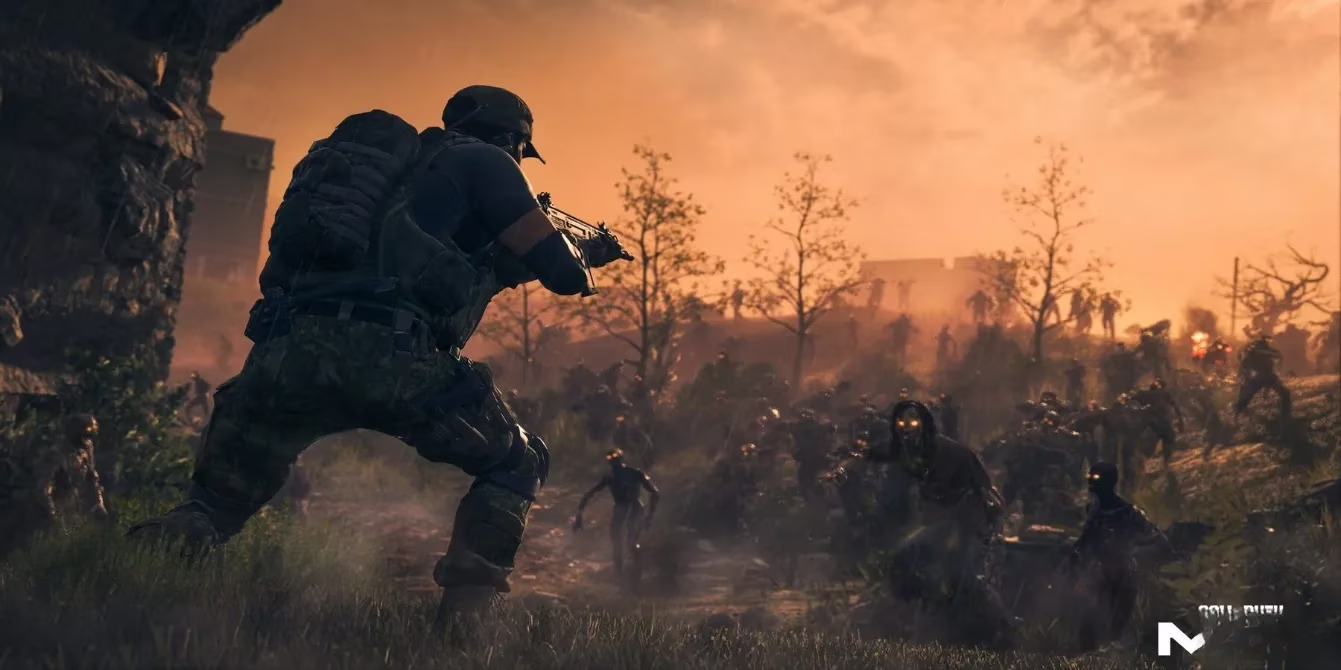
Treyarch's experimental spirit has been both the mode's lifeblood and its curse, a double-edged sword sharper than any Bowie Knife. Because they successfully cultivated a taste for vast, open-world experiences like Outbreak—a format some players now cherish like a favorite novel—they are obligated to continue feeding that appetite. However, crafting these sprawling, zombie-infested war zones consumes development resources like a black hole consumes light. This directly cannibalizes the time and manpower available for the meticulously designed, round-based survival maps that form the mode's bedrock. Since Zombies perpetually remains the "third mode" in the Call of Duty package, Treyarch operates with finite resources. This painful compromise often results in round-based maps feeling less original, sometimes confined to familiar multiplayer locales, while open-world zones heavily reuse assets from Warzone and multiplayer, making them feel less like unique nightmares and more like repurposed playgrounds.
The community's internal divisions are now etched into its very culture, as illustrated by the seemingly benign but telling "M14 vs. Olympia Gang" meme. What appears as a silly debate over two starting weapons from Black Ops is, in reality, a microcosm of the larger conflict—a symbol of how even the most foundational elements of the experience can become battlegrounds. Uniting this fragmented audience under a single banner, as the early maps like Nacht der Untoten and Verrückt once did, seems as likely as finding a coherent plot in a time-travel story.
The 2026 Stalemate and the Distant Dream
As we look at the landscape in 2026, the path to harmony remains shrouded in fog. Unless Activision performs a miracle and greenlights the long-demanded, dedicated Call of Duty Zombies standalone game—a title with the budget and focus to cater to all playstyles simultaneously—one group will always feel shortchanged. Whether it's the round-based loyalists, the open-world adventurers, the Easter egg archaeologists, or the storyline scholars, someone will inevitably draw the short straw. The mode's greatest strength—its ability to be many different things to many different people—has become its most intractable weakness. It is a glorious, shambling monument to fragmented love, a testament to the fact that you truly can't please all the people all the time, especially when those people are armed with Ray Guns and wildly different expectations. The future of Zombies is not one of unification, but of managed fragmentation, where Treyarch must continue its high-wire act, hoping each new release doesn't tip the delicate balance into outright revolt. The community, for its part, soldiers on, forever debating, forever dreaming of the perfect map, forever nostalgic for a past that grows more unified with each passing, divisive year.