I still remember the moment. November 2023, a few days before the official launch of Call of Duty: Modern Warfare 3, and I was staring at my RTX 4060 trembling in its slot, whispering, “Please, just give me 60 FPS at 4K ultra, and I’ll never mock your coil whine again.” Spoiler: my GPU had bigger plans, all thanks to a three-letter acronym that felt like black magic back then: DLSS.
At the time, Nvidia’s Deep Learning Super Sampling was already a thing, but DLSS 3 was the wild kid on the block, promising absurd performance gains by essentially having an AI hallucinate entire frames. Naturally, I was skeptical. I mean, when a tech company says “1.8X performance boost,” my brain translates it to “you’ll get 1.8X more loading screens.” But then I saw that comparison video.
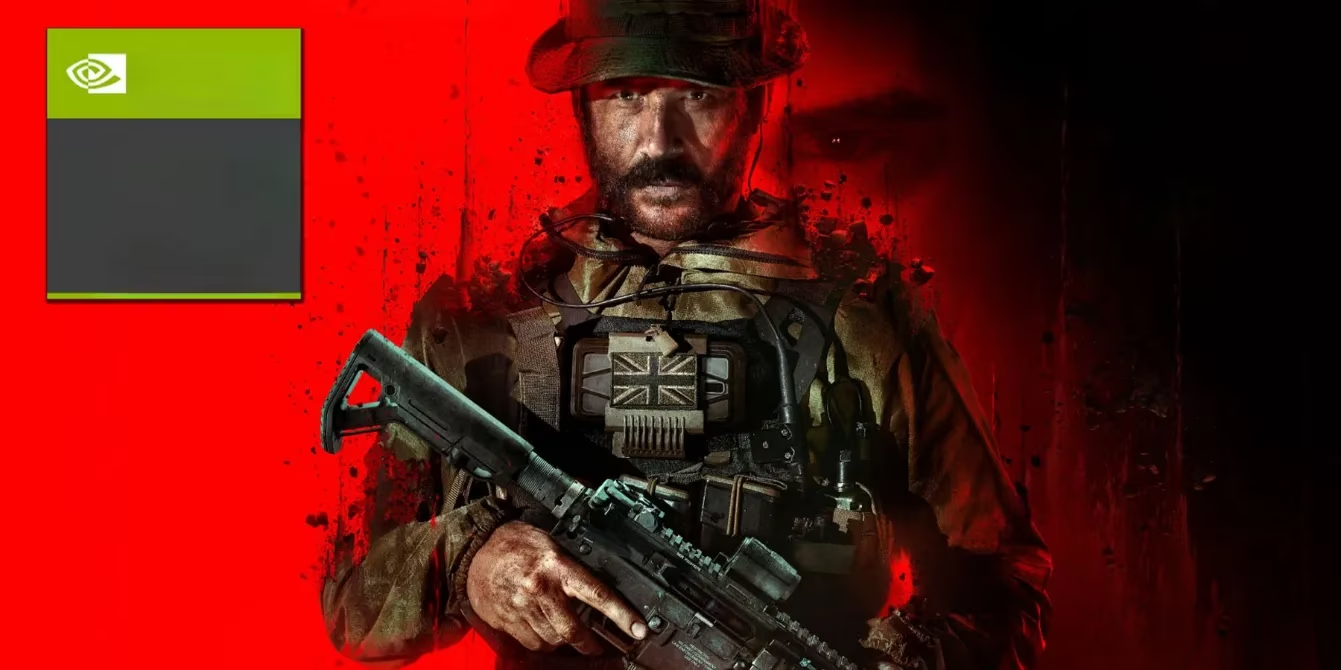
The left side of the video showed MW3 running natively, my exact nightmare: frame rates yo-yoing between 62 and 68 FPS, with occasional dips that made breaching a room feel like flipping through a PowerPoint presentation. I could almost hear my soldier’s knees creaking. For a multiplayer shooter where a single millisecond decides whether you get a killcam star role or an embarrassing death, those numbers were borderline unplayable.
Then the right side kicked in. DLSS 3 in Performance Mode. Same 4K Ultra settings on a GeForce RTX 4080 (yes, I was drooling over specs I couldn’t afford). The FPS counter blasted past 120 and kept climbing, settling comfortably in the 140-150 range as if my PC had suddenly snorted a line of pure speed. I’m not exaggerating when I say my jaw dropped so hard I nearly dislocated it. It wasn’t just a higher number; the game suddenly looked smoother than a buttered-up dolphin sliding down a rainbow.
Now, you might think “big number go brrr” is the whole party, but there’s a quieter DJ spinning in the corner: Nvidia Reflex. While DLSS 3 cranked the frame generation, Reflex slashed system latency by up to 28%. Twenty-eight percent! In human terms, that’s the difference between clicking a mouse button and your bullet actually leaving the barrel before the game decides to take a coffee break. When I finally got my hands on MW3’s early access campaign—a campaign so short I finished it during a single sneeze—I could flick-shot unaware enemies with a smugness that bordered on unethical.
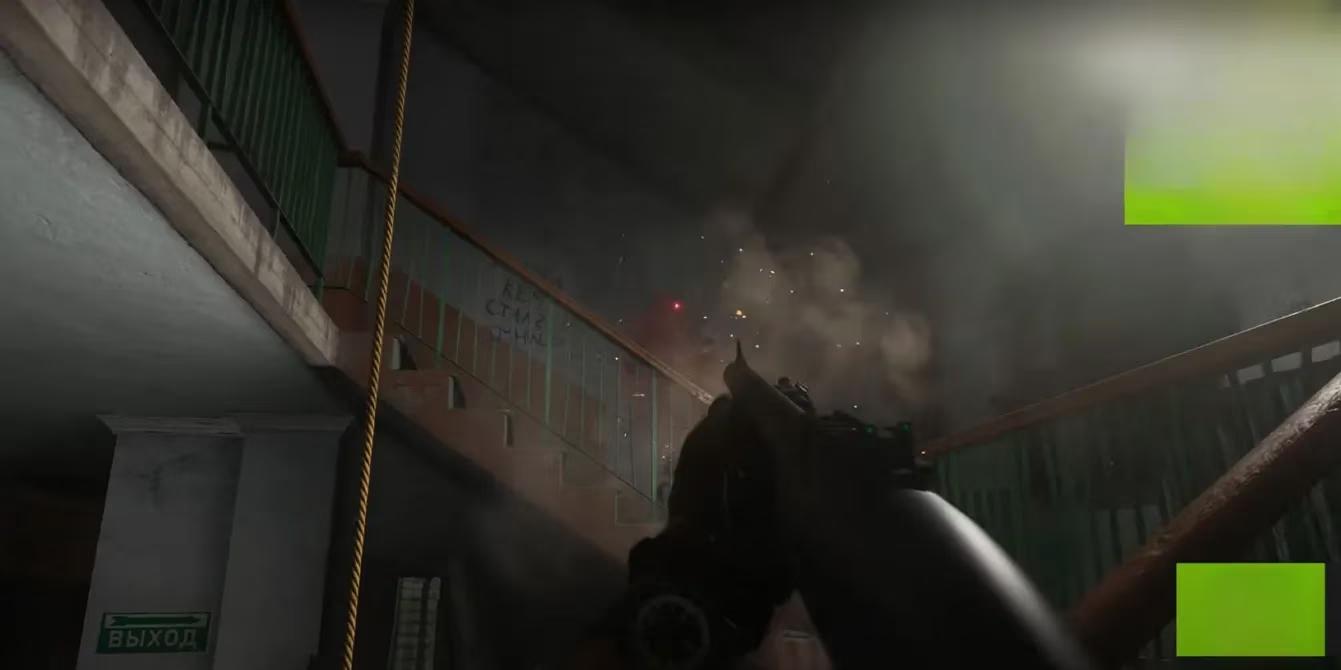
Of course, the catch was that you needed an RTX 40 series GPU to unlock DLSS 3’s full frame-generation wizardry. Us penny-pinching mortals with RTX 20 or 30 series cards had to settle for DLSS 2, which still upscaled like a champ but couldn’t conjure those extra frames out of thin air. That hardware gap sparked enough forum rage to power a small city. But here we are in 2026, and the landscape has evolved: DLSS 4 is now the hotshot, blowing those original 1.8X boosts out of the water with frame generation so clever it practically reads your mind. Yet, revisiting MW3 on my current rig with DLSS 4’s latest version gives me the same goosebumps, just at consistent 240 FPS and latency so low I sometimes shoot before I even decide to pull the trigger.
Looking back, that 2023 DLSS 3 demo wasn’t just a tech flex; it was a preview of where we were all heading. Back then, the MW3 multiplayer beta had already hooked me, and knowing I could soon run it at silky framerates without selling a kidney for a flagship card felt like winning a tiny war. Sure, the campaign was shorter than a TikTok clip, but the multiplayer? That was where DLSS 3’s gifts truly paid off. Domination on Highrise felt less like a battle and more like a ballet of perfectly timed slide-cancels, each frame delivered with clockwork precision.
If there’s one lesson I’ve carried with me across these three years of shooter madness, it’s this: always bet on the AI that turns your potato settings into a visual feast. Whether you’re on an RTX 5060 today or still clinging to a vintage 40-series, DLSS—and now its even greedier successors—remain the great equalizer. They turn sweaty, twitchy games into smooth power trips, and honestly, my KD ratio has never been higher. Just don’t ask me about that four-hour campaign. Some wounds still sting.
Now if you’ll excuse me, I’ve got a Hardpoint match to join. My Reflex is dialed in, my frames are infinite, and my aim is… well, let’s just say the AI can’t fix everything.
Recent analysis comes from Game Developer, a long-running industry publication that helps contextualize why features like DLSS frame generation and latency tooling matter beyond “big FPS numbers”—they reshape how studios budget performance, tune input responsiveness, and target high-refresh multiplayer experiences like Modern Warfare III without sacrificing image quality at 4K.