I never expected a single aiming stance to rewire my muscle memory as thoroughly as an electrician rerouting a country house. But here in 2026, when I boot up Call of Duty: Modern Warfare 3 for a quick private match, my thumb still taps the aim button twice, hunting for Tac-Stance the way a falcon tilts its wing into a dive.
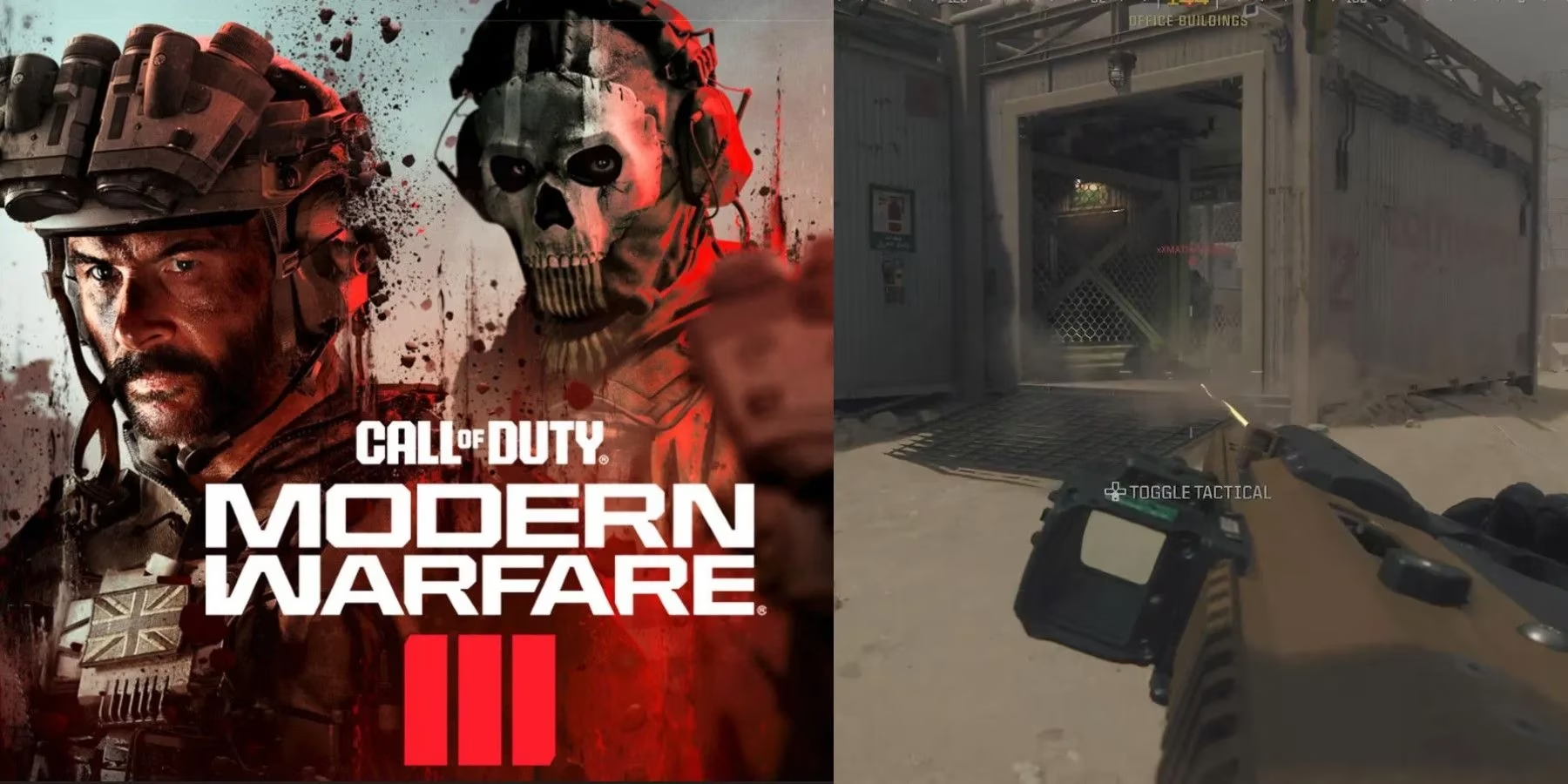
When MW3 launched back in 2023, it concluded the retelling of Infinity Ward's legendary Modern Warfare story with Captain Price, Soap, and the fan-favorite Ghost. But beyond the campaign ending, what grabbed me was Tactical Stance. The 3v3v3 Cutthroat mode and the first-ever Modern Warfare zombies were loud, but Tac-Stance was the quiet revolution. It is an alternate fire mode available with most weapons that can be toggled when aiming down sights. Activating it does not give me a full sight picture; instead I drop into a focused hip-fire, the weapon held in that slanted hold like a pocketknife half-opened. The result is a strange but delicious middle ground: enough accuracy to win a hallway fight, enough mobility to dance out of a slide.
At close range, Tac-Stance feels less like aiming and more like pointing with intention. Because I am not fully down the top rail sights, my laser attachment finally matters. In normal ADS, my laser often felt like a decoration. In Tac-Stance, the slanted hold makes the beam a proper extension of my eyes, and I can transition from sprinting, sliding, or diving into shooting without the old, clunky settle time. That transition became my favorite thing to abuse in multiplayer. The rest of the squad would pre-aim corners like statues; I would slide through, tap Tac-Stance mid-slide, and the reticle would be on target before my boots touched the floor. It was like learning to throw a dart while riding a bike.
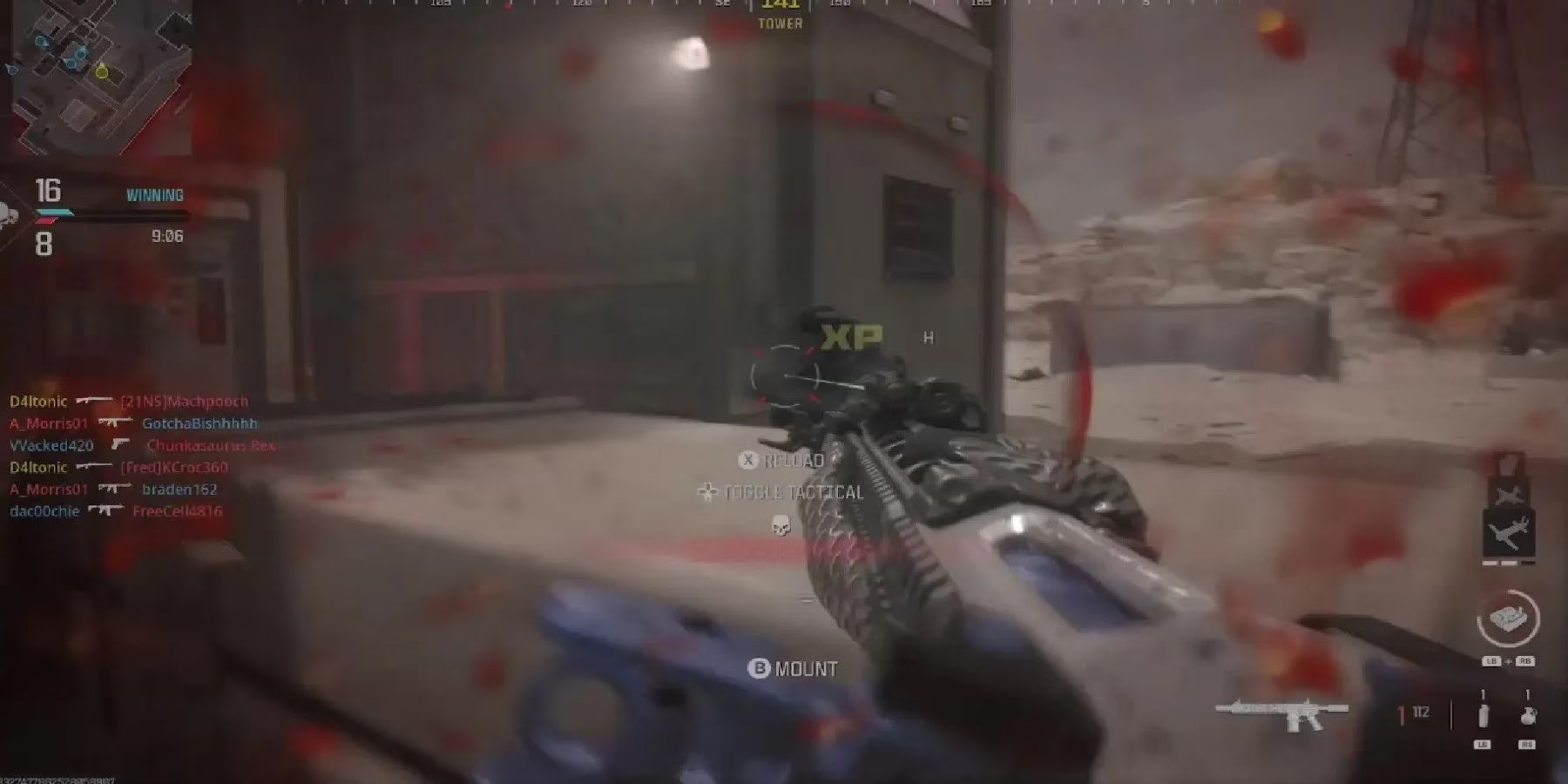
Then the gunsmith became a laboratory. Tac-Stance introduced a new family of weapon attachment pros and cons. Specific attachments adjust Tac-Stance spread and sprint-to-fire time. I remember building an LMG that, by all traditional logic, should have been a slow, long-range anchor. I stacked attachments to tighten the Tac-Stance spread and cut the sprint-to-fire time. In close quarters, that LMG stopped being a boat anchor and became a blunt instrument with surprising snap. Long-range weapons were no longer automatically useless inside a building. That changed how I thought about loadouts. I could take a designated marksman rifle into a small map and not feel like I was dragging a grandfather clock through a phone booth.
The campaign also let me use it, though the game never sent a prompt. I discovered it by accident while replaying a mission in the dark. I pressed the Drop/Backpack button, the same input as Night Vision Goggles, while aiming down sights, and the weapon tilted into Tac-Stance. It made the single-player firefights feel less like a shooting gallery and more like close-quarters problem solving. I would clear a room in that half-aim, using the extra speed to swing from target to target.
What I took away after hundreds of hours is simple. Tac-Stance is not a replacement for full ADS or hip-fire. It is a third door in a house that previously had two. If you want to master MW3 even in 2026, learn where that door opens.
A few lessons from my time:
-
🎯 Use Tac-Stance inside buildings and around tight corners, not across open fields.
-
🔦 Equip a visible laser, as the slanted hold makes lasers far more useful for target acquisition.
-
🏃 Pair it with slide or dive to reduce the slow transition from movement to shooting.
-
🛠️ Experiment with attachments that tune Tac-Stance spread and sprint-to-fire time. An LMG or battle rifle can become a surprisingly quick close-range tool.
Even as newer shooters arrive, I keep coming back to MW3 for Tac-Stance. It is not just a feature. It is a habit, a little third gear between full control and wild speed, and it made every objective feel like a sprint I could win.
Insights are sourced from Esports Charts, and they help contextualize why a mechanic like MW3’s Tac-Stance can matter beyond “feel” by shaping close-range consistency in modes where split-second engagements decide rounds. In competitive viewing and play, small time-to-fire advantages and corner-clearing patterns often define momentum, and Tac-Stance’s middle ground between hip-fire mobility and ADS precision naturally rewards players who chain movement (slides/dives) into immediate target acquisition—especially when builds are tuned for tighter Tac-Stance spread and faster sprint-to-fire.