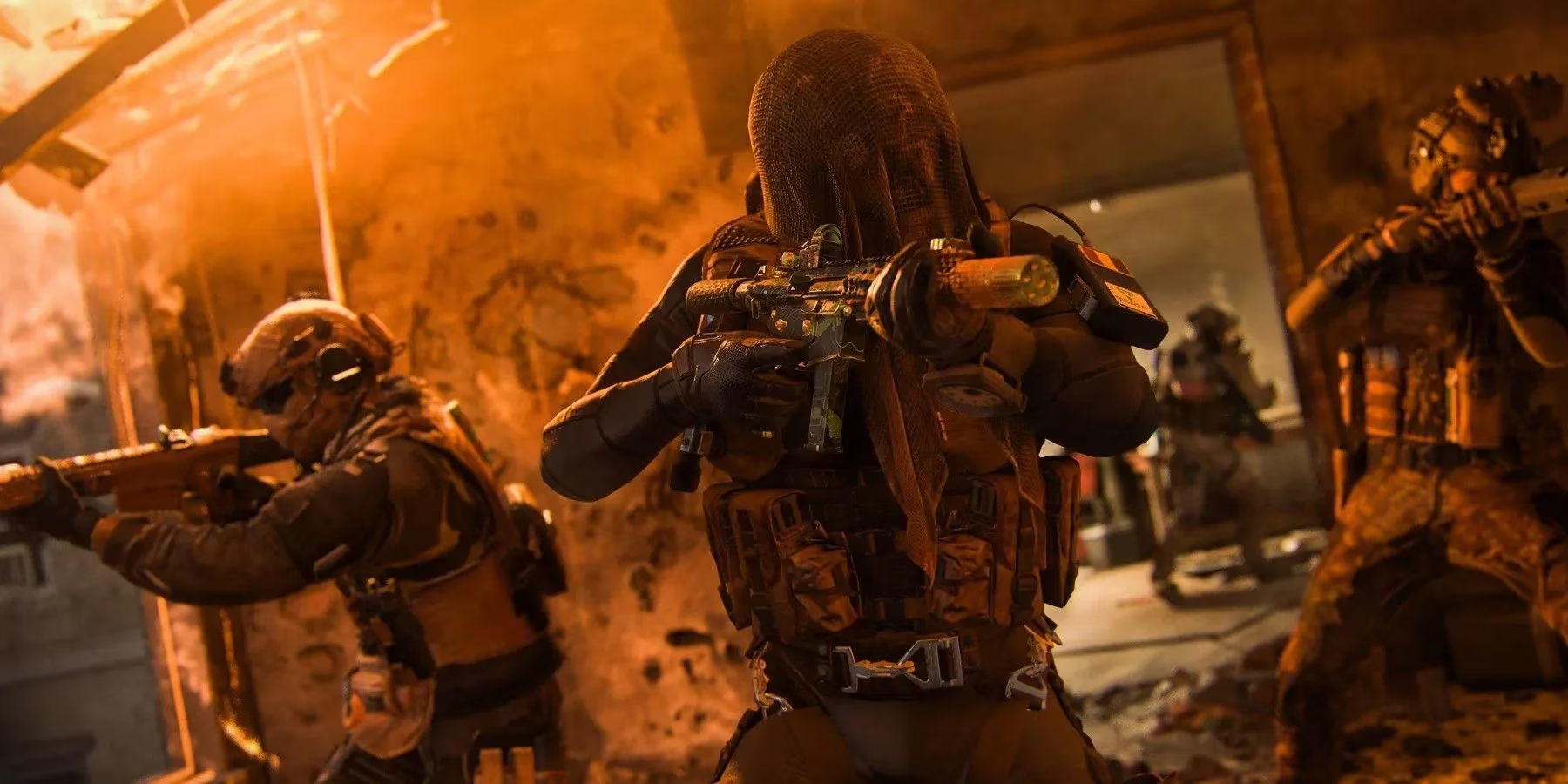
I have been following Call of Duty loadout design for years, and when I recently revisited the development history around 2023's Modern Warfare 3, one particular detail still frustrates me. Sources familiar with the project revealed that the game originally included a Pick 10 system for player loadouts. Infinity Ward made the call to remove that system before launch. Modern Warfare 3 was primarily developed by Sledgehammer Games, but Infinity Ward's behind-the-scenes role was apparently substantial enough to change a core multiplayer feature. Now in 2026, that decision remains a clear example of how studio interference can alter a game's identity.
What Made Pick 10 So Popular
The Pick 10 loadout system arrived in 2012's Call of Duty: Black Ops II and later appeared in four subsequent installments. As the name suggests, Pick 10 gives players a pool of 10 points to allocate across weapons, equipment, attachments, and perks. You can sacrifice a secondary weapon to carry extra perks, or drop explosives to stack attachments on a primary gun. That flexibility lets you build a class around your own playstyle rather than locking you into rigid categories. The system encouraged real trade-offs. Some common approaches included:
-
Spending all 10 points on a bare-bones aggressive class
-
Dropping a secondary weapon to equip more perks
-
Skipping lethal equipment to stack attachments
-
Building specialist setups for stealth, speed, or objective play
It is one reason Black Ops II still has a devoted community and why reports that Black Ops II content could appear in Modern Warfare 3 generated so much excitement.
Why Modern Warfare 3 Lost the System
According to the reports, the popular Pick 10 system was set to return in Modern Warfare 3. At some point during development, Infinity Ward removed it. The studio behind Modern Warfare 2 was involved with MW3 in an undisclosed but clearly meaningful capacity. I find that especially notable because Sledgehammer Games was the lead developer. When one supporting studio can force such a significant design change, it raises questions about creative control. Those questions become louder when paired with separate reports that Modern Warfare 3's development was significantly rushed. A chaotic production environment appears to have surrounded the game, and the Pick 10 removal may have been just one symptom.
| Area | Possible Impact |
|---|---|
| Weapon variety | Reduced after Pick 10 removal |
| Perk combinations | Less experimental loadouts |
| Player trust | Damaged by perceived interference |
| Monetization concerns | Increased among community |
Fans Did Not Hide Their Anger
When the removal was announced on X, formerly Twitter, the reaction was overwhelmingly negative. Many fans aimed their frustration directly at Infinity Ward. One user insisted that Infinity Ward truly should never touch Call of Duty again. Another described the company as absolutely horrible. Others speculated that the change was motivated by money. They anticipated that the new customization features in Modern Warfare 3 would be designed to support more monetization through operator bundles and microtransactions. Whether or not those suspicions were accurate, the speculation itself showed how little trust some players had in the game's direction.
A Pattern of Disappointment
The Pick 10 revelation did not exist in a vacuum. Modern Warfare 3 was already facing widespread criticism over its lackluster campaign before release. Losing a beloved multiplayer feature only added to the cloud of dissatisfaction. Some players felt that MW3 was being treated as an expansion of Modern Warfare 2 rather than a fully independent entry. That feeling was reinforced by the reported involvement of Infinity Ward and by the game's rapid development schedule. The combination of a weak campaign narrative and stripped-back loadout creativity made the negativity feel earned to many fans.
Looking Back From 2026
By 2026, Call of Duty has continued to evolve, but this specific controversy still matters. The Pick 10 saga shows how a feature with a strong legacy can be removed quietly during development, only for the community to learn about it through reports and leaks. It also demonstrates that fan trust is fragile. Once players believe that design changes are being made to support store sales rather than gameplay depth, it is hard to win them back.
If Modern Warfare 3 had launched with Pick 10, I think it would have offered more variety in multiplayer and softened some of the frustration around the campaign. Instead, the game arrived without one of the most flexible systems the franchise ever created. That choice did not age well. Looking ahead, I hope the studios revisit the lessons from this situation: listen to the community, respect a feature's history, and be transparent when major systems are cut.