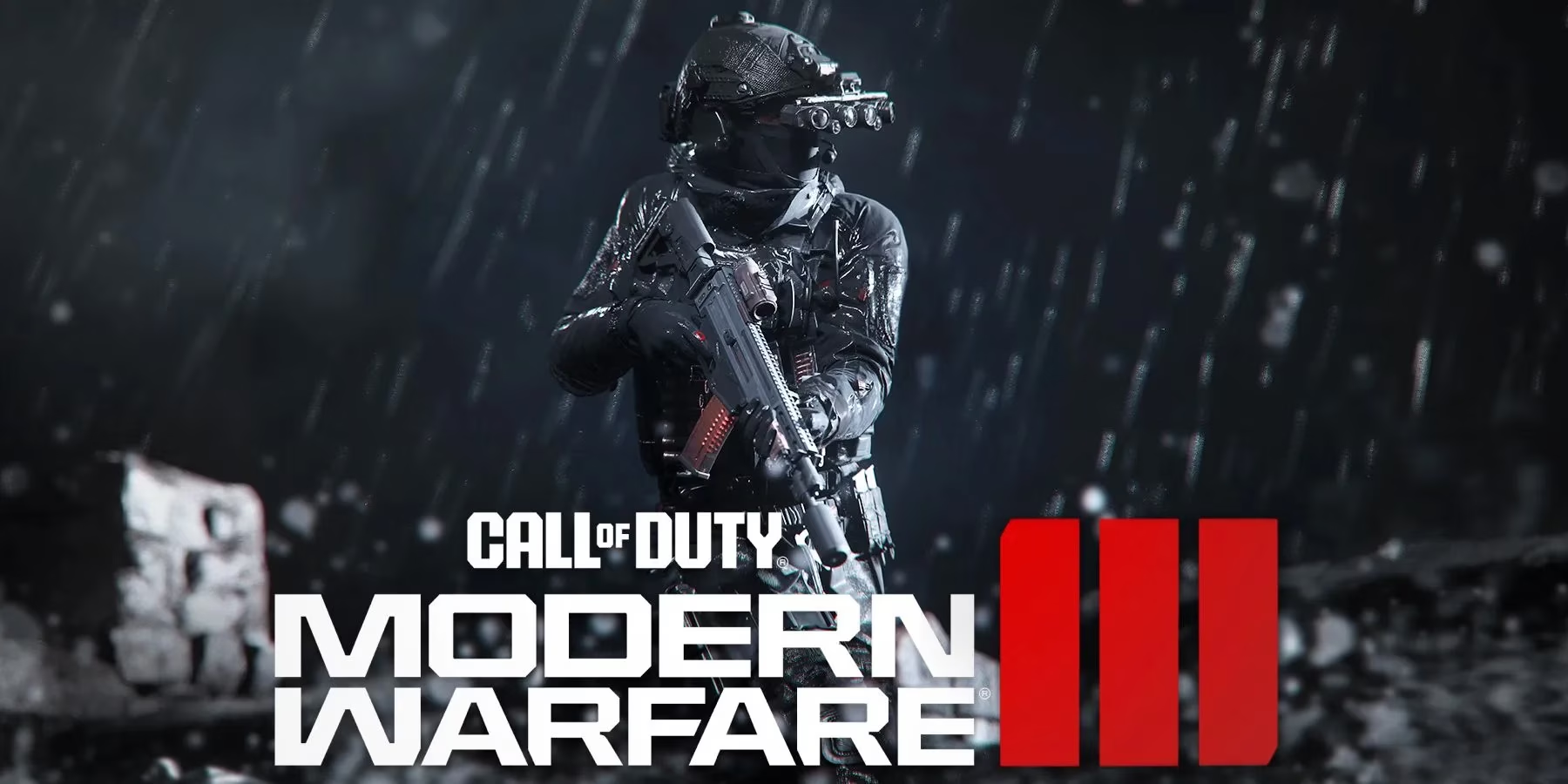
I still remember late 2023 like it was yesterday. The gaming world was buzzing, and not in a good way. Call of Duty: Modern Warfare 3 had just launched, and the backlash was fast and fierce. Players complained about a lackluster single-player campaign, and then a Bloomberg report dropped claiming the game had been made in just 16 months. The report suggested that Activision had rushed the project to market after delaying Treyarch's planned 2023 entry. Sledgehammer Games, the studio behind Modern Warfare 3, wasted no time pushing back.
Now, as I look back from 2026, that moment still feels like a turning point for the franchise. Let me break down what actually happened and why it mattered.
Before we dive into the drama, it helps to understand how Call of Duty development normally works. For years, the series operated on a three-year cycle, with three main studios rotating duties:
-
Infinity Ward
-
Treyarch
-
Sledgehammer Games
Since 2016, Raven Software has also assisted all three teams, especially as the lead on the battle royale Warzone experiences. That structure gave each studio roughly three years to craft a mainline game. But according to several reports around 2023, Modern Warfare 3 signaled a shift to a two-year development model. The idea was to alternate between unique, full-scale games and iterative sequels like Modern Warfare 3. Those iterative sequels would apparently become Sledgehammer's exclusive responsibility.
The Bloomberg report by Jason Schreier added more fuel to the fire. It said that after Activision delayed Treyarch's 2023 Call of Duty game, Modern Warfare 3 was rushed out in only 16 months. It also claimed that Sledgehammer initially wanted to make another Advanced Warfare game after finishing 2021's Vanguard. Instead, Activision ordered the studio to pivot to Modern Warfare 3. Worst of all, the report said Modern Warfare 3 began life as DLC for Modern Warfare 2 before becoming a standalone title.
Sledgehammer's response came quickly. Studio Head Aaron Halon posted a statement on X (formerly Twitter). He didn't just deny the rumors; he rejected large parts of the report entirely. Halon said the team spent years realizing the vision for Modern Warfare 3. He wrote that anything said to the contrary was simply not true. He also addressed the Advanced Warfare claim, saying Sledgehammer made the first back-to-back sequel in franchise history because that's what fans were asking for.
This is where the story gets interesting. An Activision spokesperson had already denied the DLC claim before Halon's statement. But the damage was done. Many players felt the campaign was too short, too linear, and not up to the series' usual standards. The multiplayer carried over a lot from Modern Warfare 2, which added to the perception that this was more of an expansion than a full sequel.
Here is a quick side-by-side look at the conflicting claims:
| Claim | Bloomberg Report | Sledgehammer Response |
|---|---|---|
| Development time | 16 months | Years of work |
| Original plan | Advanced Warfare sequel | Fan-driven back-to-back sequel |
| Starting point | MW2 DLC | Standalone vision |
| Reason for pivot | Treyarch delay | Not stated directly |
That table sums up the core disagreement. As a fan, I can see both sides. Short development cycles are an industry-wide reality, especially for big live-service franchises. But if players feel burned, no PR statement can fully fix that trust. The criticism aimed at Modern Warfare 3's campaign was especially loud. It was clear even then that single-player content had taken a backseat to Warzone and multiplayer.
By early 2024, the conversation had shifted, but the wounds were still fresh. Looking back now in 2026, the Modern Warfare 3 controversy feels like a warning shot. It showed that even a juggernaut like Call of Duty isn't immune to fan backlash when quality slips. Activision had already mapped out the next four years of the franchise at the time, so the schedule wasn't going to change overnight. Still, the debate over crunch, rushed development, and live-service fatigue hasn't gone away.
What I find most telling is how Sledgehammer framed everything. Instead of admitting any sort of rushed timeline, they doubled down on the idea that Modern Warfare 3 was a complete, fan-focused project. Whether you believe that or not, one thing is certain: the line between full sequel and premium expansion has become blurrier than ever. For Call of Duty, the pressure to deliver year after year—now on an even tighter schedule—will likely keep shaping the series for years to come.