In the ever-expanding theater of modern combat simulations, the horizon of 2026 is dominated by the legacy of Call of Duty: Modern Warfare 3. Its arrival was not as a singular, isolated event but as the crescendo of a meticulously woven narrative, a direct continuation where the battlefields, the soldiers, and most significantly, their tools of war were inherited. This seamless carry-over of content from its predecessor created an arsenal of staggering proportions, a digital armory so vast it promised unparalleled choice. Yet, within this promise of abundance, a profound question lingered: could such a wealth of weaponry be a burden, a double-edged sword threatening the very equilibrium of the game's competitive soul?
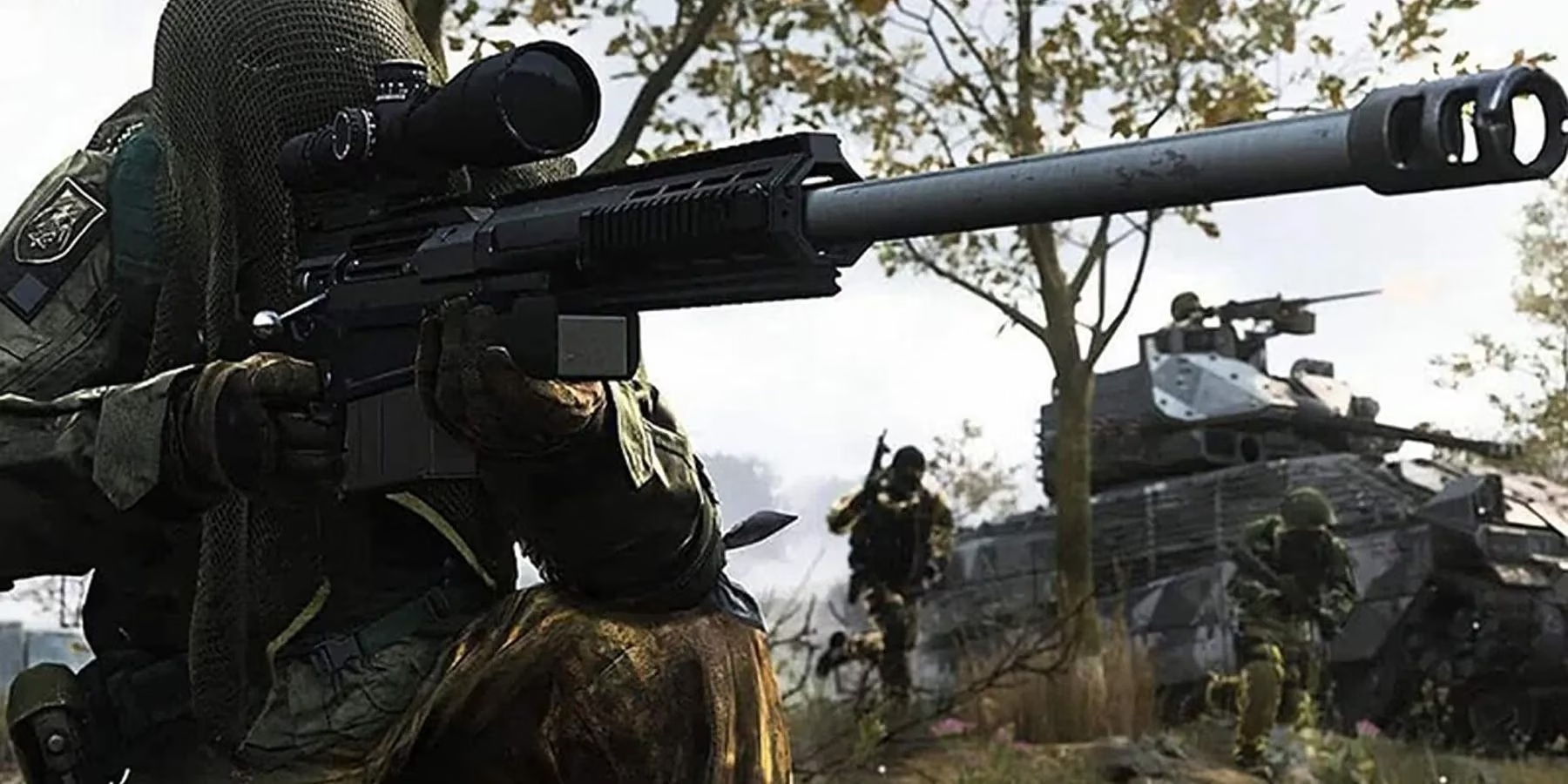
The scale of this inheritance was unprecedented. Modern Warfare 2 had already set a high bar, dazzling operatives with 51 distinct weapons at its outset, a number that only grew with the tides of seasonal content. Modern Warfare 3, however, did not merely add to this foundation; it built upon the entire structure. The game launched not with a blank slate, but with the complete Modern Warfare 2 arsenal intact, welcoming veterans back with their familiar, customized firearms. Onto this bedrock were layered 38 entirely new instruments of war. The result? A launch armory boasting a minimum of 89 unique weapons, a figure that decisively shattered previous records and redefined player expectations for content volume.
This was not just about guns. The continuity extended deep into the soldier's identity and aesthetic. The transition preserved:
-
✅ Unlocked Operators and Operator Skins
-
✅ Weapon Blueprints and Cosmetics
-
✅ Calling Cards, Emblems, and Vehicle Skins
Such continuity fostered a powerful sense of persistent legacy, but it also set the stage for an immense logistical challenge. Is a wider selection inherently a better one? Or does it merely dilute the focus, creating a landscape where true mastery and balance become Herculean tasks?
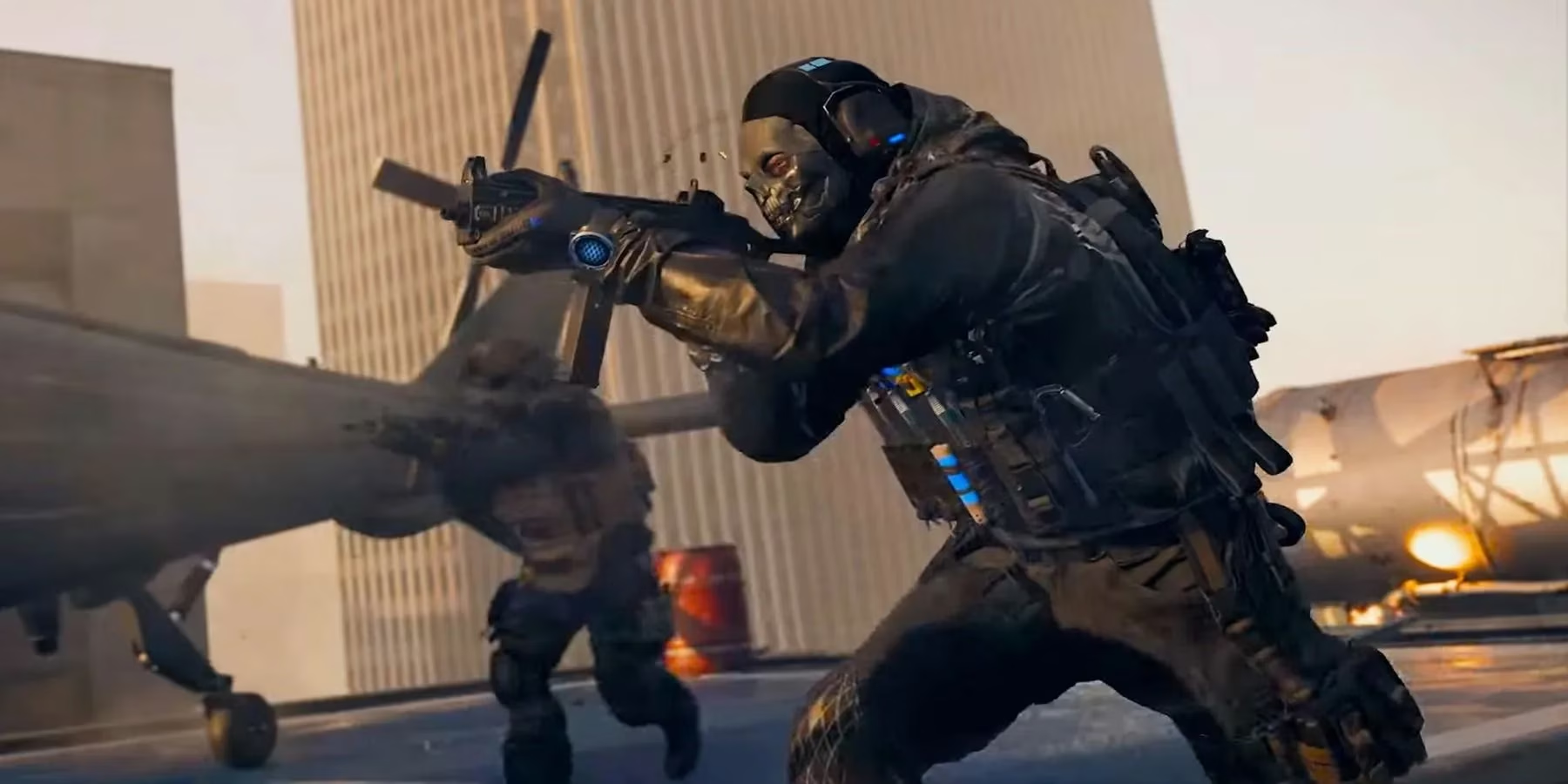
The heart of the peril lies in the sacred tenet of balance. In any competitive shooter, the meta—the most effective tactics available—is a living, breathing entity, shaped by endless skirmishes and data. Developers, like modern-day armory smiths, must constantly tweak and adjust, ensuring no single weapon dominates to the point of stifling creativity, while also lifting underperforming arms into moments of glory. This delicate dance is complex enough with 50 weapons. With nearly 90 at launch, and the certainty of more through seasonal updates, the variables multiply exponentially.
Consider the modern tools at a player's disposal: the intricate weapon tuning system. This feature, allowing microscopic adjustments to a gun's handling, transforms each firearm from a static item into a spectrum of potential configurations. What appears as one weapon in the menu is, in practice, dozens of subtly different variants. Balancing this is not merely about adjusting damage or recoil across 89 entries; it's about managing thousands of interconnected data points. Can any development team, no matter how vigilant, truly hold the entirety of this complex web in perfect harmony?
The risk is a snowball effect. As the weapon count climbs with each season, the balancing pool becomes an ocean. It becomes statistically more likely for certain weapons—or specific, tuned configurations of weapons—to 'slip through the cracks.' These outliers can rapidly become dominant, distorting the meta. The irony is palpable: a system designed to promote vast variety could, if unbalanced, achieve the opposite. Why would a player experiment with 88 other options if one or two prove overwhelmingly superior? The intended tapestry of choice could unravel into a monoculture, dictated by an unchecked, overpowered few.
This is not a hypothetical fear but a lived reality in the annals of online warfare. The developers at Sledgehammer Games faced a monumental task, one requiring not just initial calibration but a commitment to intense, ongoing analysis and frequent, nimble changes. The community watches, knowing that even a brief period of imbalance can define a season, driving frustration and homogenizing playstyles. The arsenal of Modern Warfare 3 stands as a testament to ambition and player-centric continuity. Yet, it also serves as a cautionary tale about the weight of abundance, a reminder that in the pursuit of more, the most precious commodity to maintain is not quantity, but fair and vibrant competition. The true test became not the size of the armory, but the wisdom with which it was governed.