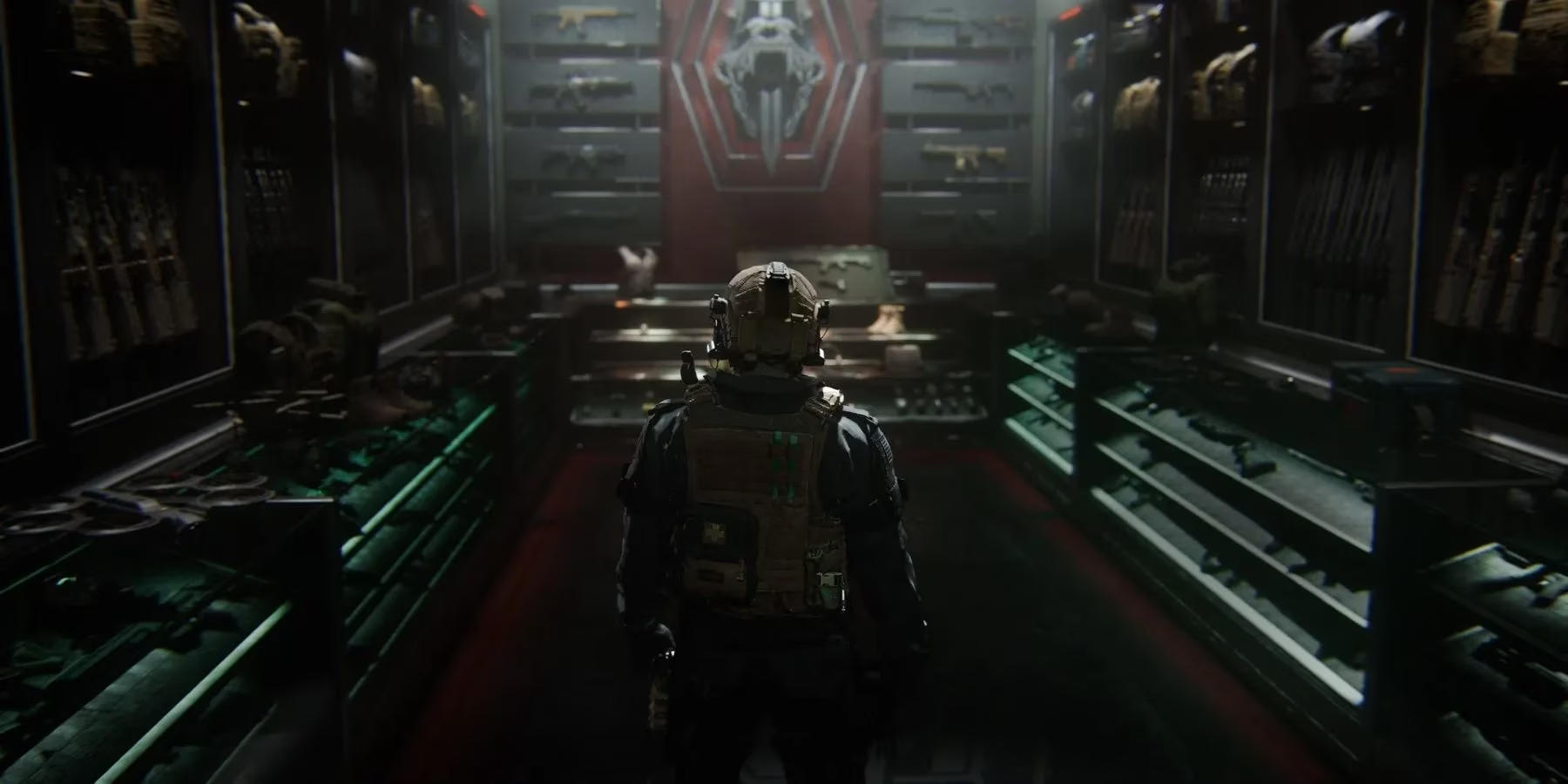
Back in 2023, when Call of Duty: Modern Warfare 3 finally dropped, the air around the community was electric. Players who had been counting down the days since the beta practically sprinted to the armory, eager to see if the promises of deeper, more personal loadouts would hold up. And oh boy, did they ever. The loadout screen didn’t just feel like an upgrade—it felt like the game was leaning in and whispering, “Go on, build something uniquely yours.”
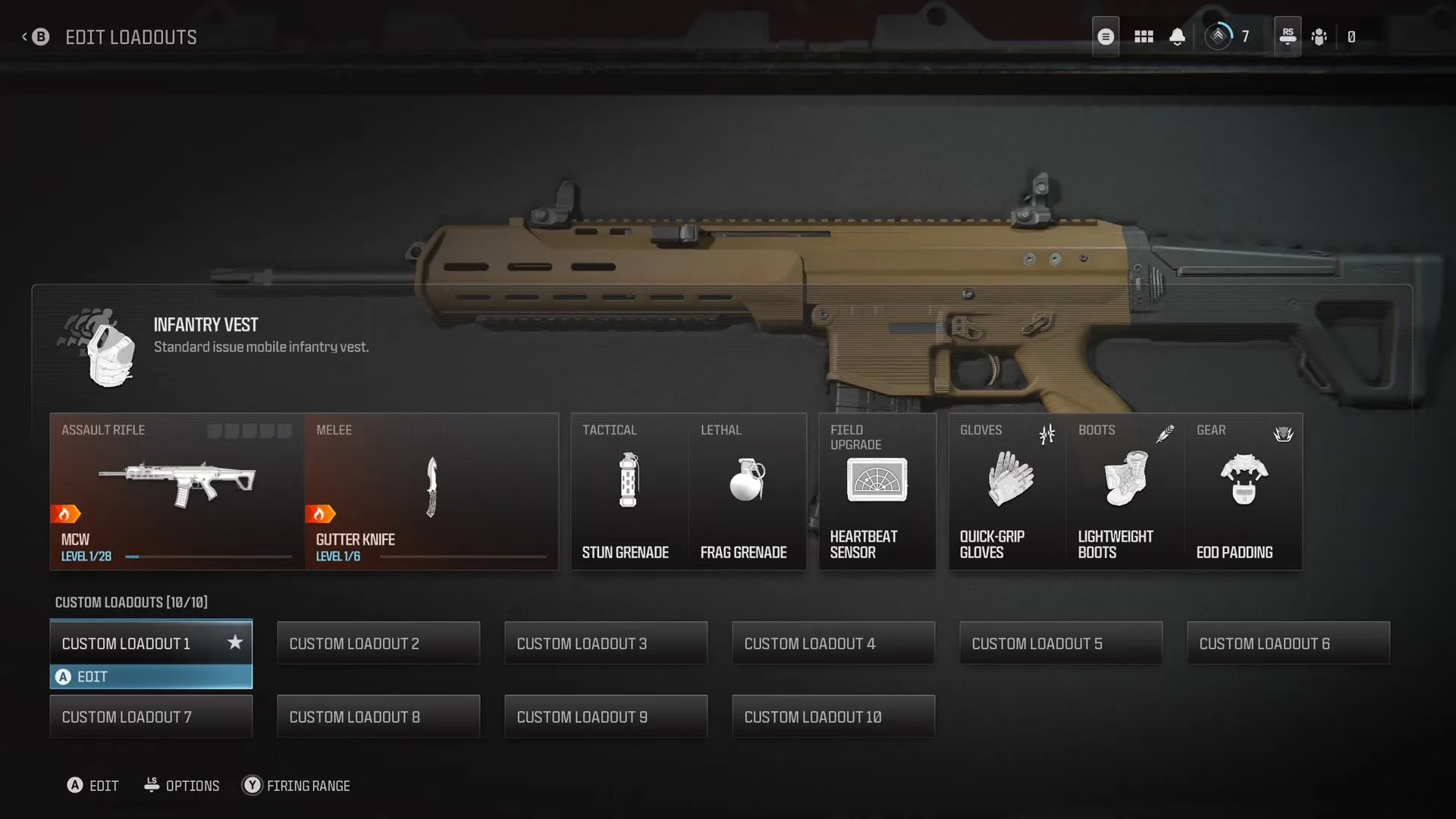
From the get-go, the multiplayer side tossed a familiar yet freshly polished menu at players—one that could hold up to 10 customized loadouts. Veterans of Modern Warfare 2 nodded at the familiar layout, but then they noticed something new staring right back at them: Vests. These weren’t just cosmetic fluff; they were the heartbeat of a soldier’s entire kit. Each vest dictated how many pieces of equipment a player could lug into a match, and bundled in a specific set of perk-like skills. The choice wasn’t trivial. Sledgehammer Games made sure of that, nudging players to pick a vest that synced with their weapons, their gadgets, and—let’s be honest—whatever wild playstyle they’d cooked up. If you wanted to run and gun like a maniac, there was a vest that almost patted you on the back and said, “I got you.” If you preferred a more methodical sentinel role, another vest quietly promised to keep you alive a few seconds longer. That extra layer of synergy meant no two loadouts ever felt quite the same.
The equipment roster was a buffet of choice. Many of the lethal and tactical items had flashed their teeth in the open beta, giving the community a taste of the chaos to come. Frag grenades, stuns, drill charges—they all returned with their own little quirks. Killstreaks, too, straddled that line between satisfying nostalgia and fresh firepower. But what really made heads turn was how all these toys didn’t simply mirror each other across modes. In Zombies, for instance, the rules of the sandbox shifted. The undead didn’t care about your fancy vest—seriously, vests packed their bags and left the mode entirely. Instead, survival hinged on an alternate perk system and field upgrades that felt more arcane, more desperate. It was the game’s way of saying, “You’re not in Kansas anymore.” Yet the guns themselves? Those were a constant. A weapon leveled up in multiplayer could slide right into a Zombies loadout, carrying its attachments and history with it. That continuity bound the two worlds together just enough to make players feel like their grind always meant something.
Now, if you peek behind the curtain of the undead mode, the differences stacked up fast. Where multiplayer soldiers fretted over which Infil boots or gloves to wear, Zombies operators worried about which Aether-flavored perk could save their hide when a horde cornered them in a dark alley of the open world. Field upgrades like the energy mine or the healing aura weren’t just tools—they were lifelines, swapped out for ones that never saw the light of day in a Domination match. Some lethal and tactical items did manage to jump the fence, but their behavior often felt… different. A stun grenade’s familiar pop against a human opponent became a weirdly unsatisfying fizzle against a hoard of the shambling dead. It forced even the most seasoned players to sit back, scratch their heads, and rethink everything they knew about loadout building. That dynamic tug-of-war between modes kept the theorycrafting channels buzzing for weeks.
When the campaign faced an avalanche of criticism—rightfully or not—the multiplayer arm of Modern Warfare 3 shouldered the burden of keeping the community invested. And honestly, it did a pretty solid job. The vests especially injected a fresh strategic twitch into every pre-match lobby. No longer could someone auto-pilot their way through a game with a one-size-fits-all setup. Now you had to squint at your screen and debate, “Do I want two pieces of tactical gear because I’m a flashbang addict, or do I sacrifice that for a skill that keeps my footsteps silent?” Choices like these turned the armory into a mini-game of its own. Updates rolled in over the following months, adding more vests with even wilder perk combinations—some that made you a mobile ammo factory, others that turned you into a near-silent specter. By mid-2024, the vest selection had ballooned, and the meta danced like a caffeinated hummingbird.
Fast forward to 2026, and it’s easy to see the fingerprints of Modern Warfare 3’s loadout philosophy all over the genre. The idea of a core equipment piece that fundamentally shaped a build wasn’t just a gimmick—it was a lesson. Later titles, from the next Black Ops installment to various competitors, started flirting with their own spin on vests, gear kits, and role-defining slots. The move marked a shift from simply piling on the strongest attachments to truly curating a playstyle from the ground up. Looking back, that launch week in November 2023 feels like a pivotal moment, a time when the franchise said, “Customization isn’t just a checkbox anymore; it’s a conversation.” Gamers who stuck with the title still trade stories about the vest that saved their killstreak or the Zombies run where a mismatched field upgrade got them torn apart in hilarious fashion. That’s the legacy of a well-built loadout system—it gives you tools, lets you make your own mistakes, and somehow keeps you smiling through the respawn screen. The armory doors in Modern Warfare 3 weren’t just open; they were inviting everyone in to stay a while, tinker endlessly, and maybe, just maybe, discover a little bit of themselves in the process.
Key findings are referenced from GamesIndustry.biz, and they help frame why Modern Warfare 3’s vest-driven loadout system resonated beyond moment-to-moment firefights: when a single core gear slot meaningfully changes capacity and passive benefits, it nudges players toward clearer roles, stronger experimentation loops, and longer-term engagement across seasons. Seen through that lens, MW3’s “build-defining” vest choice (rather than just stacking best-in-slot attachments) reads less like a one-off UI tweak and more like a retention-minded design move that encourages continuous tinkering, meta shifts, and cross-mode investment in weapon progression.