Whispers of revolution echoed through digital trenches when Infinity Ward unveiled Call of Duty: Modern Warfare in 2019. This wasn't merely another installment in a fatigued franchise; it was a defiant homecoming. Six years later, its impact lingers like gunpowder in rain-soaked concrete—a testament to how studio reclaimed its crown by weaving ancestral DNA with bold evolution. The ghosts of Modern Warfare and Modern Warfare 2, those titans of tactical exhilaration, stirred within this rebirth. Yet beneath familiar contours pulsed innovations that dared reshape combat itself.
🎯 Embracing the Echoes of Glory
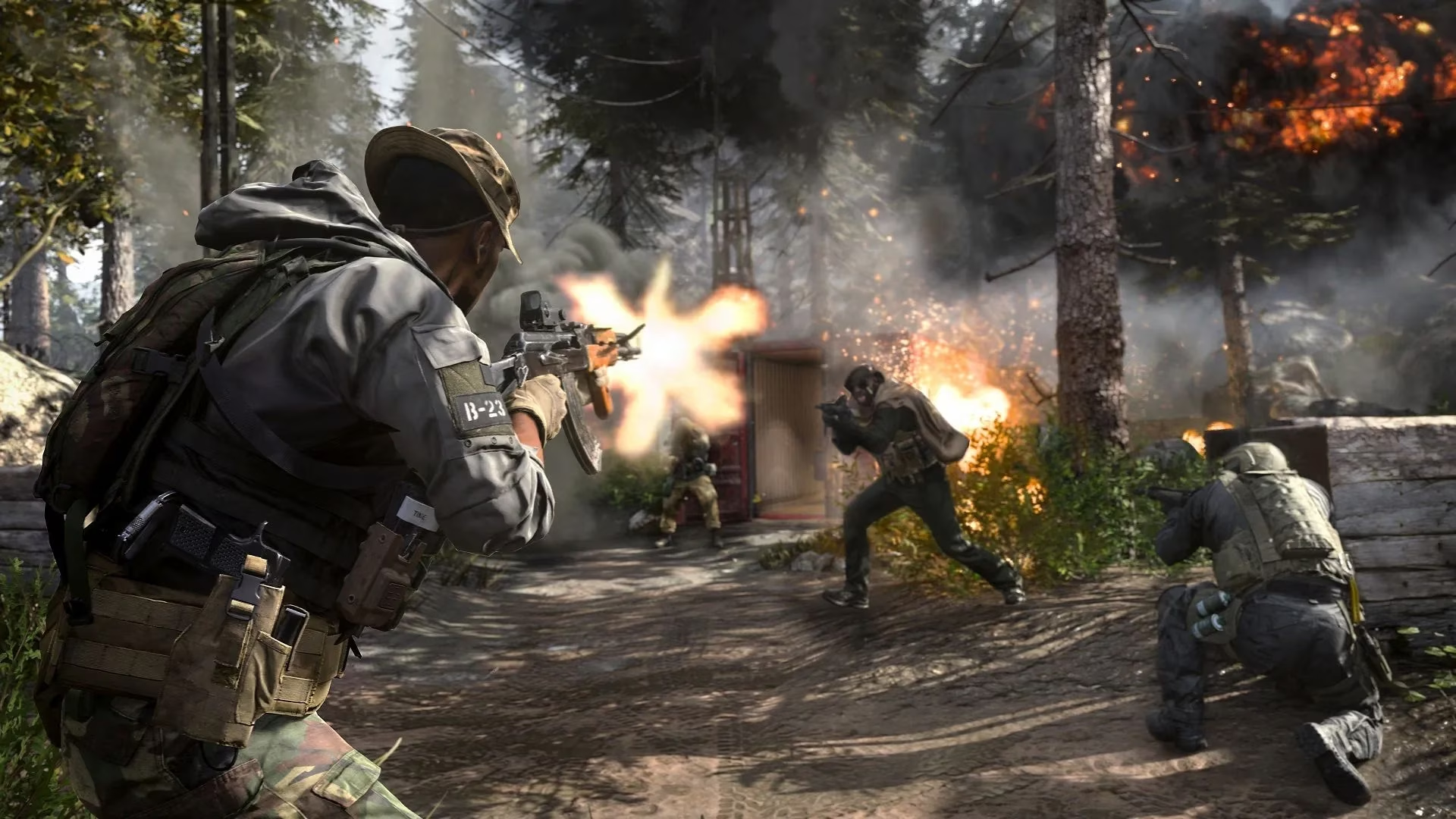
Heavier footsteps now thud across battlefields, recalling the deliberate cadence of Call of Duty 4. Gone are the acrobatics of recent titles; soldiers move with grounded heft, each stride telegraphing intention. Killstreaks, those beloved orchestrators of chaos, supplanted divisive Scorestreaks—reigniting the primal thrill of consecutive eliminations rewarded with devastating force. Headquarters, a mode lost to time’s attrition, resurrected itself alongside forgotten rhythms of objective warfare. Even map philosophy bowed to legacy: the rigid three-lane templates popularized by Treyarch dissolved into organic labyrinths where lanes blurred into seamless flow. Azhir Cave epitomized this—a tapestry of cavern shadows, village alleys, and sun-blasted outskirts stitched by hidden arteries allowing fluid flanking. Invisible walls crumbled; every ledge, crate, and rubble pile became scalable terrain.
🔥 The Alchemy of Tactical Evolution
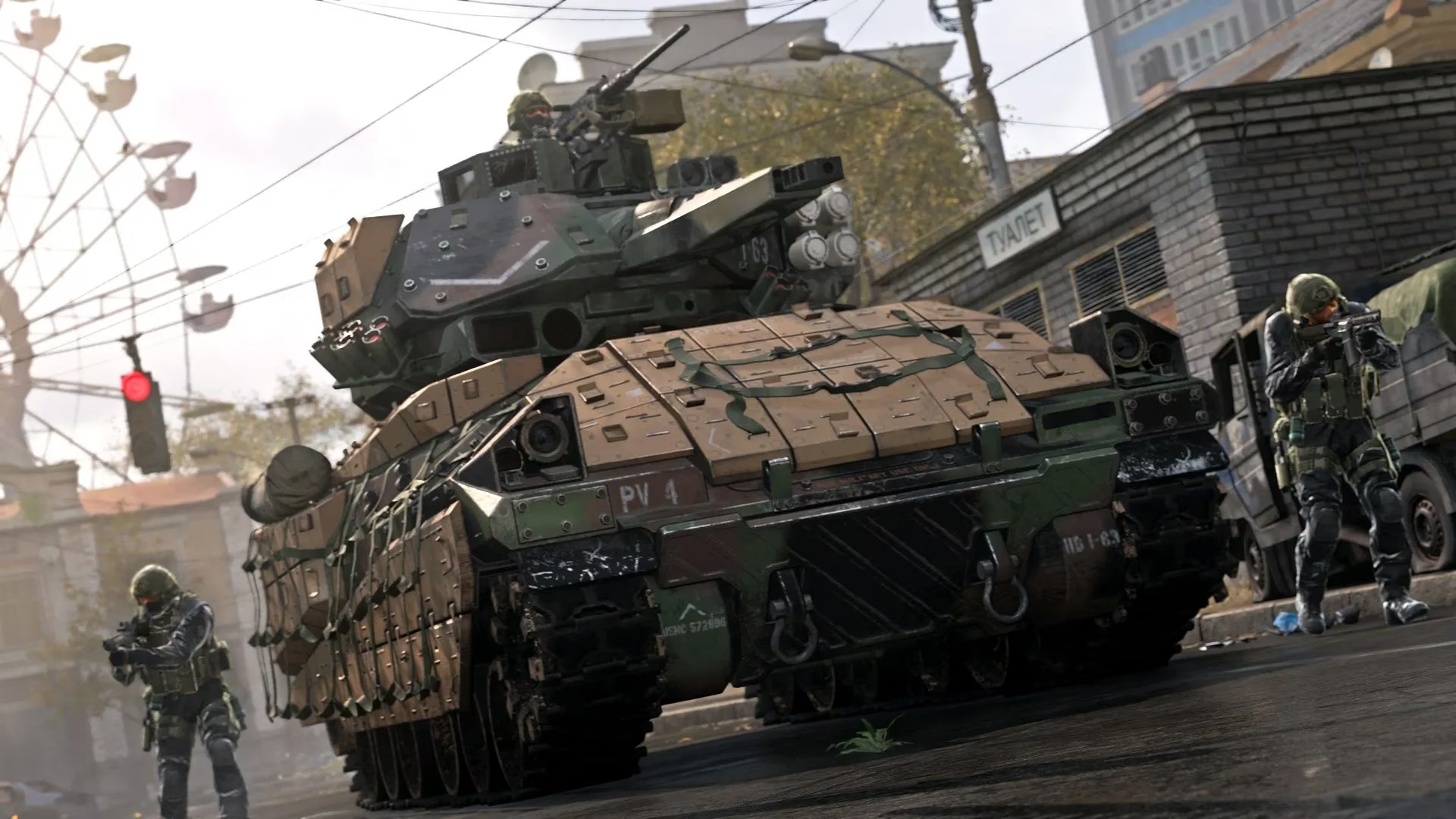
Modern Warfare’s genius lay not in replication but reinvention. Doors ceased being static props—they became tactical fulcrums. Sprint through them to burst into rooms, edge them open while aiming down sights for cautious advances, or blast hinges apart with explosives. Bullet physics abandoned hit-scan simplicity; rounds now penetrated surfaces realistically, dropping over distance, demanding marksmanship recalibration. Weapon mounting emerged—a game-changer allowing rifles to brace against cover, steadying aim while exposing minimal silhouette. Then came the darkness. Night vision wasn’t a gimmick; it transformed maps into tense cathedrals of infrared beams and lurking peril. In Realism Mode, stripped of HUD guidance, the blackness swallowed careless soldiers whole unless they embraced the eerie green glow. Yet this embrace came at cost: infrared tracers betrayed positions, crafting lethal games of shadow and revelation. Some found the obscurity oppressive—a pendulum swinging too far from visibility.
⚙️ The Architect of Armaments
Customization underwent its own renaissance. Gunsmith dismantled the Pick 10 paradigm, replacing it with deep weapon sculpting across five attachment slots per firearm. Fifteen launch weapons offered canvases for experimentation—barrels, grips, optics, and muzzles intertwining into personalized instruments of war. Yet Create-a-Class echoed Modern Warfare 2’s purity: three Perks, three Killstreaks, one lethal, one tactical grenade. New Field Upgrades injected strategic spontaneity—ammo crates replenishing allies, Stopping Power Rounds briefly magnifying lethality. Unlike Black Ops 4’s hero abilities, these felt earned, momentary advantages rather than destiny-altering powers. Operators remained cosmetic specters—silhouettes devoid of mechanical weight, emphasizing that skill, not skins, dictated survival.
🌟 A Visual Reckoning
For years, Call of Duty languished aesthetically. Modern Warfare shattered that complacency. Its new engine conjured revelations:
-
Lighting: Sunlight speared through dust clouds; muzzle flashes carved stark chiaroscuro in midnight corridors
-
Textures: Weapon surfaces gleamed with obsessive detail—scratched metal, worn leather, oil-slicked bolts
-
Sound Design: Gunfire didn’t just report; it roared. Each report carried unique timbre—from shotgun thunder to sniper crack—felt in the bones
-
Animations: Reloads weren’t chores but ballets of mechanical precision, every magazine click resonating with tactile satisfaction
Flaws surfaced—texture streaming hiccups, occasional visual skips—yet these felt like birth pangs of ambition. The franchise finally matched contemporaries in raw sensory impact.
💰 Monetization’s Uncharted Terrain
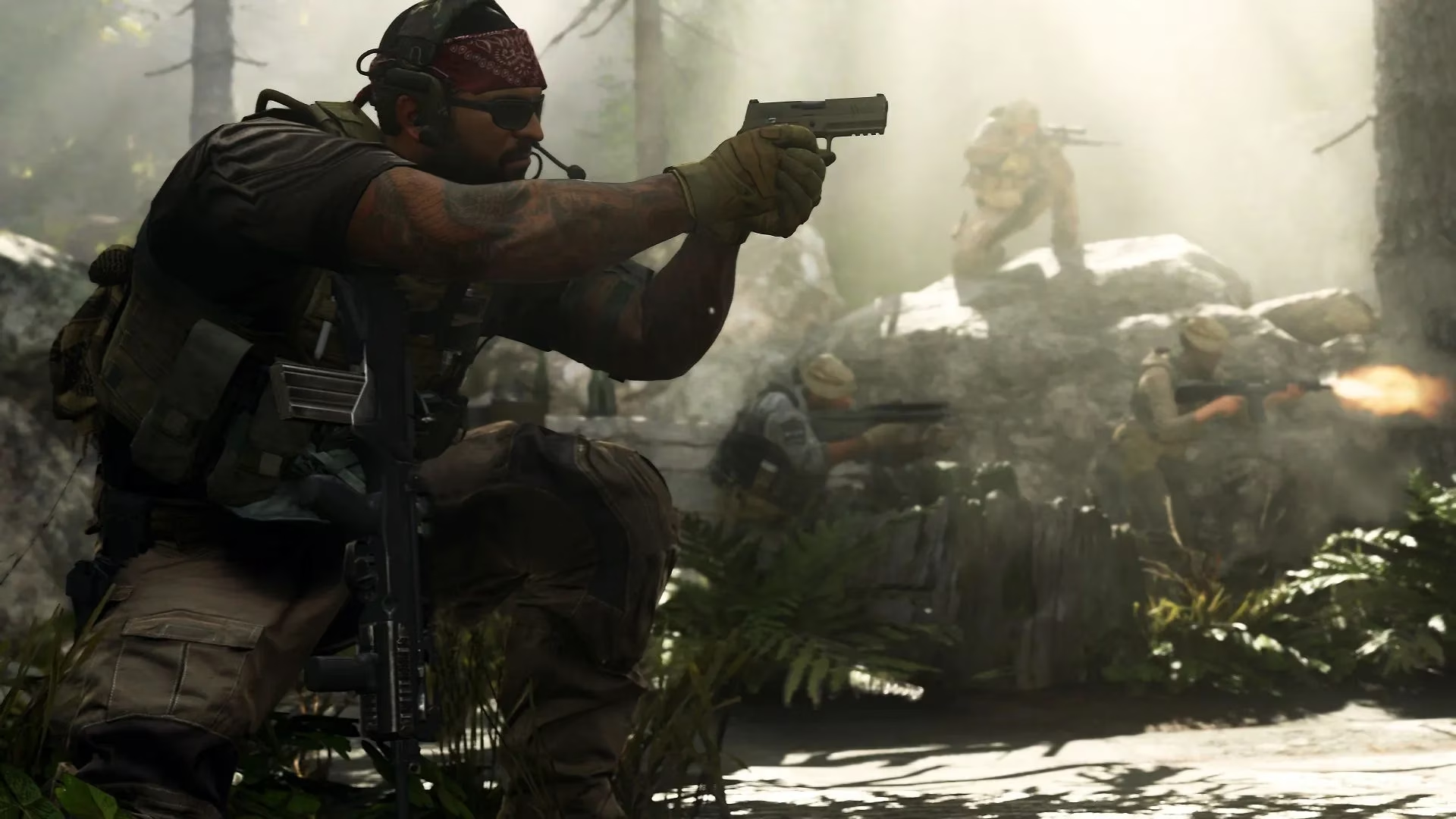
Perhaps its boldest stroke was discarding the Season Pass. Maps flowed freely to all platforms—a dismantling of paywalled fragmentation. Cross-play united PC, PlayStation, and Xbox soldiers in shared theaters—an overdue harmony. But shadows lurked. Black Ops 4’s microtransaction specter haunted conversations. Infinity Ward’s silence on monetization models bred unease. Would fairness prevail, echoing Infinite Warfare’s challenge-based weapon unlocks? Or would grind or payment become gatekeepers? This tension remained unresolved—a ghost in the server room.
🔮 Legacy Forged in Gunmetal
Modern Warfare wasn’t a remaster. It was a séance—channeling the deliberate pacing, lethal intimacy, and map brilliance of its ancestors while grafting innovations that redefined engagement. Battle Maps birthed 20v20 warfare—exhilarating chaos scaling beyond franchise norms. Tactical Maps honed 6v6 precision. Flash Maps distilled combat into Gunfight’s knife-edge duels. Six years later, its slower tempo still resonates—a deliberate counterpoint to years of breakneck velocity. The question lingers: did it merely resurrect ghosts, or forge something enduringly new? Its soul remains defiantly torn between memory and revolution—a war without end.