I remember the moment the image first appeared on my feed—a soldier, clad not in camouflage, but in the unmistakable red and white of Little Caesars, wielding a pizza cutter like a tactical blade. It was a leak, of course, another digital whisper in the endless stream of Modern Warfare 3 pre-release chatter. Yet, this one felt different. It wasn't just another gun skin or map teaser; it was a full-blown fast-food operator, a surreal marriage of pepperoni and paramilitary action that perfectly captured the strange, commercial soul of modern gaming. As someone who has navigated every CoD release since the original Modern Warfare, I couldn't help but feel a wave of nostalgia mixed with absurd amusement. This wasn't just a promo; it was a statement, a colorful, greasy flag planted firmly in the hyper-realistic battlegrounds of 2026.
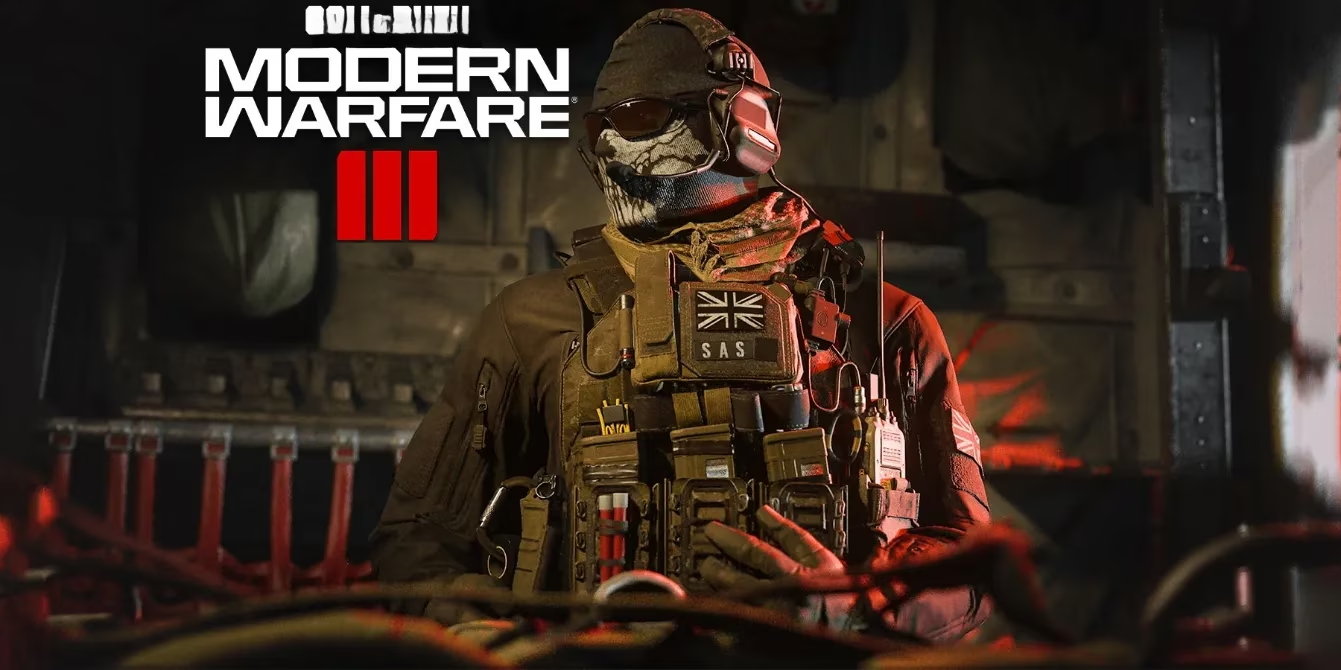
The leak itself was poetic in its mundanity—a photograph of a real-world banner, destined for some restaurant wall, captured and flung into the digital ether. There he was, the "Pizza Ops" specialist, his gear adorned with the chain’s iconic "Hot-N-Ready" slogan and a cheeky, grinning cartoon fry. The pizza cutter, strapped to his vest, gleamed with a deadly promise. In that moment, the boundary between my gaming world and the one where I ordered late-night snacks completely dissolved. Activision’s history with these cross-promotions is long and leaky, a tradition where soda cans and burger boxes become unlikely heralds of virtual warfare. The Monster Energy leak that revealed the MW3 logo early was merely the latest verse in this ongoing poem of corporate synergy. This Little Caesars reveal felt like the next, inevitable stanza.
I began to piece together what this meant for the experience. Promotions like these are rituals. They pull us out of our digital trenches and into the fluorescent glow of a restaurant, transforming a simple transaction into a quest for digital loot. The leak suggested the event would kick off with the campaign's early access, a perfect alignment of virtual and real-world appetites. I imagined the process:
-
The Pilgrimage: A visit to the temple of deep-dish.
-
The Offering: Purchasing the ordained meal deal.
-
The Revelation: Uncovering the sacred code on the box or receipt.
-
The Ascension: Redeeming it for glory (and a double XP boost) in-game.
It’s a cycle I’ve participated in before, yet it never loses its peculiar charm. The main prize, of course, is the operator skin itself. To stride into the chaotic, visually stunning maps of Modern Warfare 3—where the time-to-kill feels as crisp and immediate as ever—while dressed as a mascot for breadsticks and crazy bread? That is a level of ironic detachment that I, as a player, have come to cherish. It’s a wink from the developers, an acknowledgment that beneath the gritty realism and intense combat, this is still a playground.
This isn’t even the first time Little Caesars and Call of Duty have shared an oven. Back in 2022, for Modern Warfare 2, a similar promotion let players gather codes with a cap of 80 per account. I recall the mild frenzy, the discussions on forums about the most efficient way to secure the goods without consuming a mountain of pizza. It’s plausible, even likely, that this new iteration will come with similar limits—a gentle reminder that even in the pursuit of digital fashion, moderation is key. These events create their own micro-communities, bound by the shared goal of obtaining a silly, wonderful skin. We become collectors of the bizarre, soldiers of fortune… and cheese.
As the November release solidified MW3's place in the annual cycle, these crossovers began to feel less like intrusions and more like integral textures of the game's identity. The season themes promised to make the game feel "stranger," and what is stranger than a battlefield where a soldier’s uniform proudly displays a side of marinara? It speaks to a game confident enough in its core, visceral shooting mechanics to not take its aesthetic too seriously all the time. In the tense silence before a round of Search and Destroy, spotting a teammate in his full Little Caesars regalia is a moment of levity, a shared joke that momentarily lifts the weight of the simulated war.
So here I am, in 2026, a veteran of countless digital battles, genuinely excited about the prospect of earning a pizza-themed outfit. It’s a small, silly thing in the grand scheme of a massive AAA release. Yet, in its silliness, it holds a peculiar kind of magic. It connects the game to the rhythm of everyday life, to the simple pleasure of a hot meal. It reminds me that play is supposed to be fun, even when it’s wrapped in the most serious of packages. When the promotion goes live, I’ll make my pilgrimage. I’ll order the meal, claim my code, and suit up. And then, I’ll dive back into the meticulously rendered chaos of Modern Warfare 3, a warrior fueled not just by skill, but by the spirit of Hot-N-Ready convenience, ready to serve up something extra on the battlefield.
Data referenced from Sensor Tower helps frame why Modern Warfare-style cross-promotions (like the Little Caesars “Pizza Ops” operator leak) keep showing up: brand tie-ins can spike short-term attention, re-engagement, and conversion by turning a routine purchase into an in-game reward loop (codes, cosmetics, and XP boosts) that nudges lapsed players back into the daily grind.